If we had to pick a theme for our Tropics to Tundra 2026 adventure, it might coincide with the Great Northern Arts Festival theme of “Gathering.” For their 37th annual summer event, they wanted to celebrate people communing around art, music, words and food. For our break the loop summer event, it’s gathering our patience and summoning our will to get the heck out of the kick-your-ass Northwest and Yukon territories.
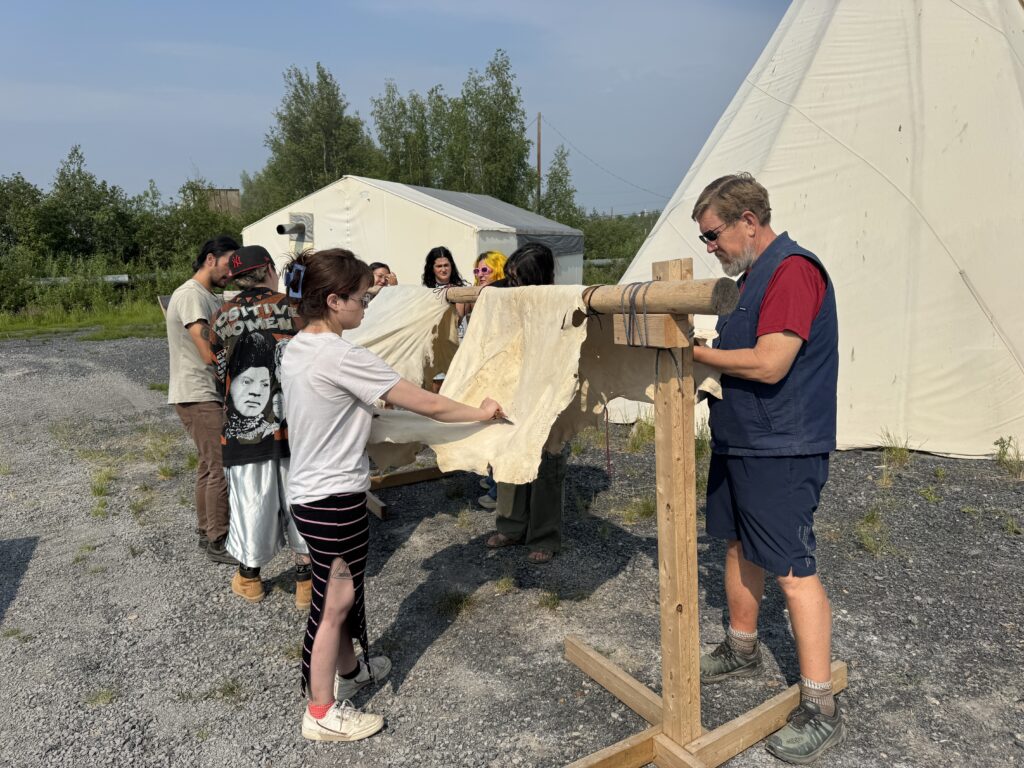
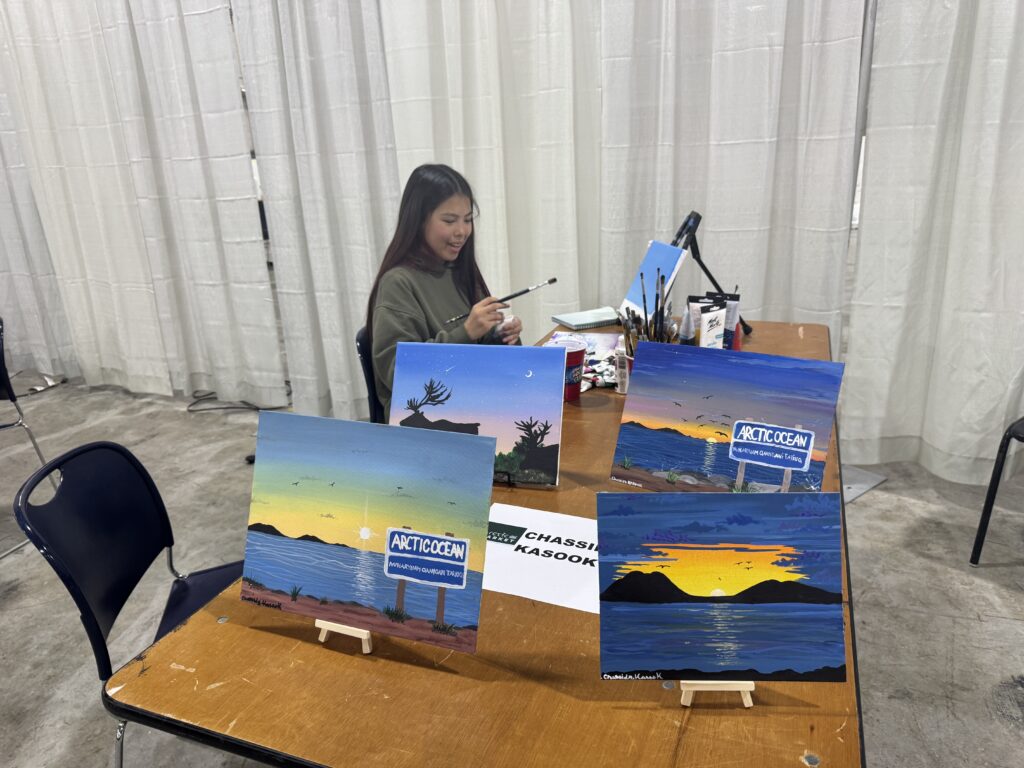
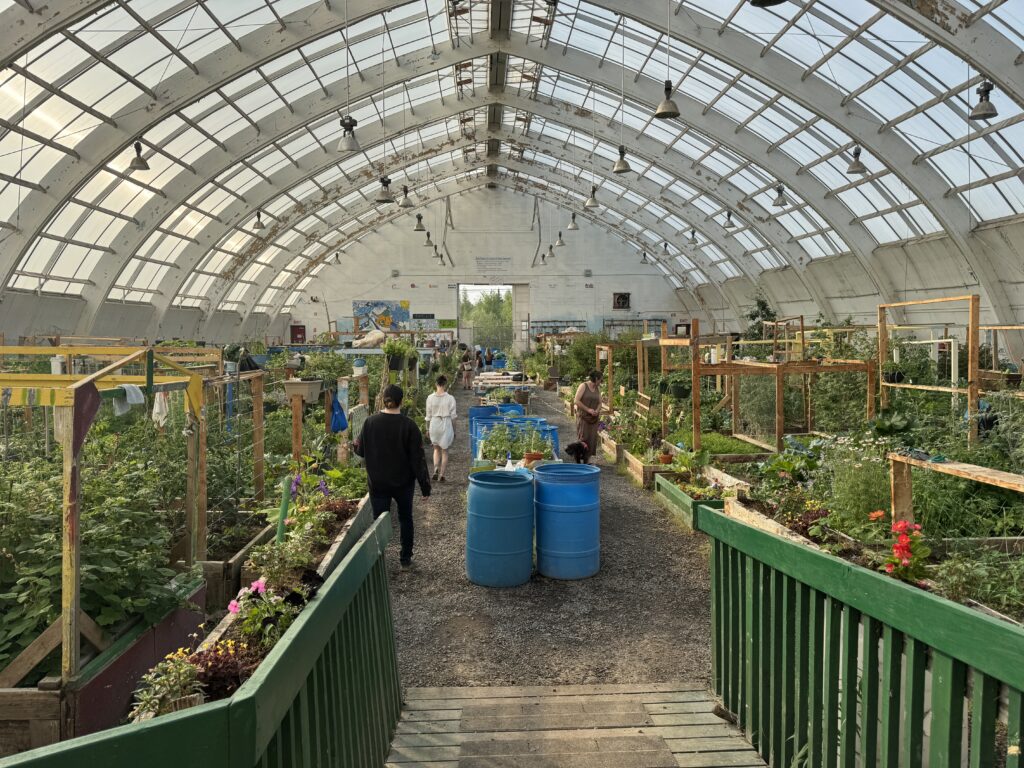
The GNAF is a town takeover. The ice rink becomes the Arctic Market, the curling rink is the Gallery showcasing artist creations, the gymnasium is for music, fashion and dancing, while the Greenhouse hosts workshops and events, and the town hall gives hide tanning demonstrations. Most festivals we attend are as spectators. This one is entirely interactive. For an artist to show in the gallery, they must teach a workshop. If people are dancing, drumming or singing, you are invited to participate and/or share your talent alongside. If you are not a professional artist but you want to try to sell your crafty creations, you get a table in the Arctic Market. And if you are a cook, you bring your global flavors in crock pots and serving trays. It is a week of diverse and inclusive programming designed for friends and strangers to gather and express themselves together.
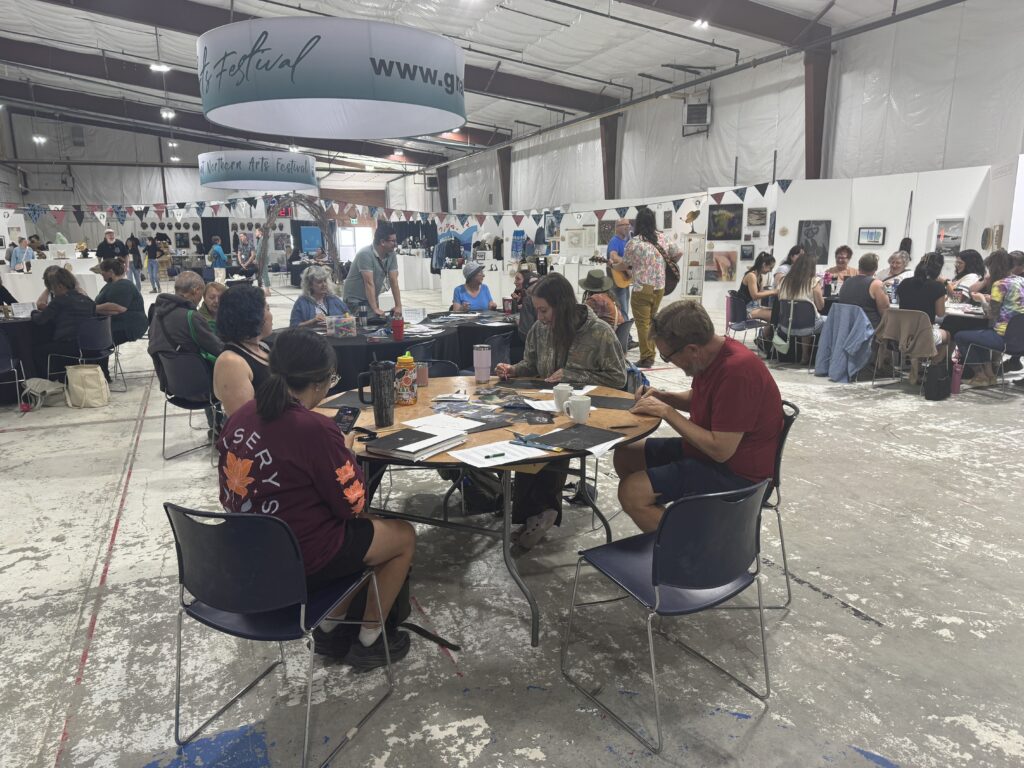
Scratchboard is clay coated paper or board that is topped in black india ink. The art is in scraping away the black to reveal the undercolor, in our case, silver. It’s a very unforgiving art form. One scratch in the wrong place cannot be fixed. We swapped clay mask making for scratching since we were late to the GNAF party and chatted with tattoo artist/pilates instructor Cassie from Ontario, grad student Rhea from Edmonton whose t-shirt read BE FUCKING NICE, and Alana, mother of three who now lives in Inuvik and was stuck at Eagle Plains with us for 4 days.
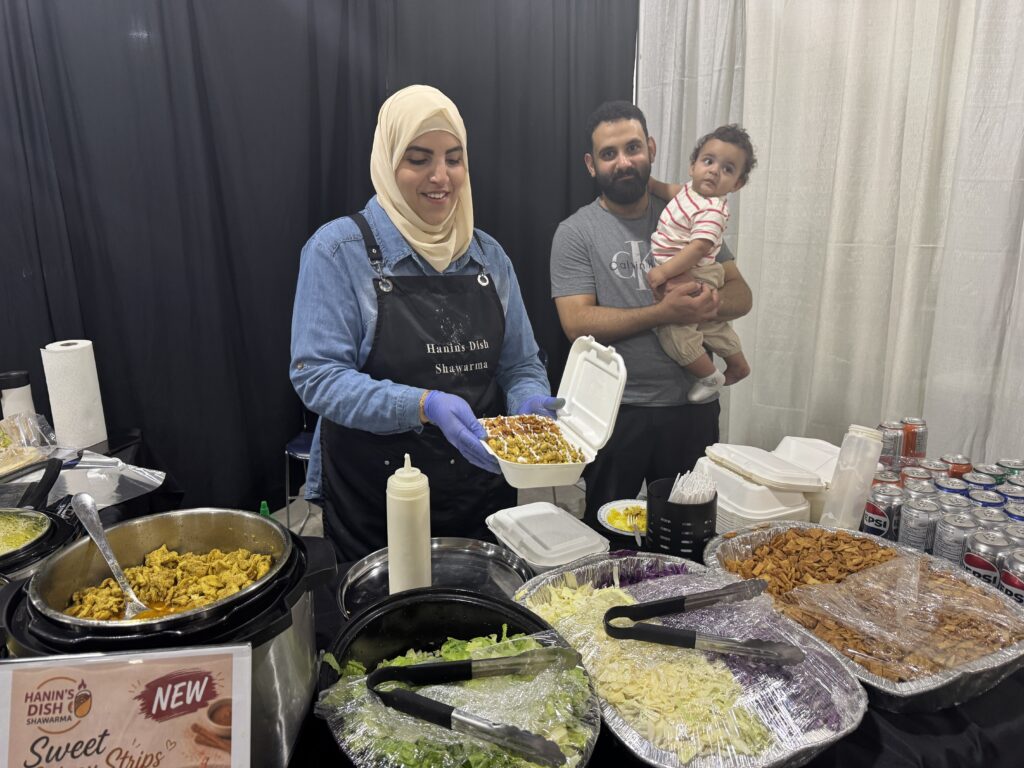
The Arctic Market offered Filipino, African and Indigenous cuisine. In the end we tried the shawarma from a Syrian who has been living in Inuvik for five years. In that time the rest of her family has immigrated, she’s had a baby and her husband opened the one and only barbershop in town. It was the best shawarma we tasted in Inuvik. Bradenton? That’s another story.
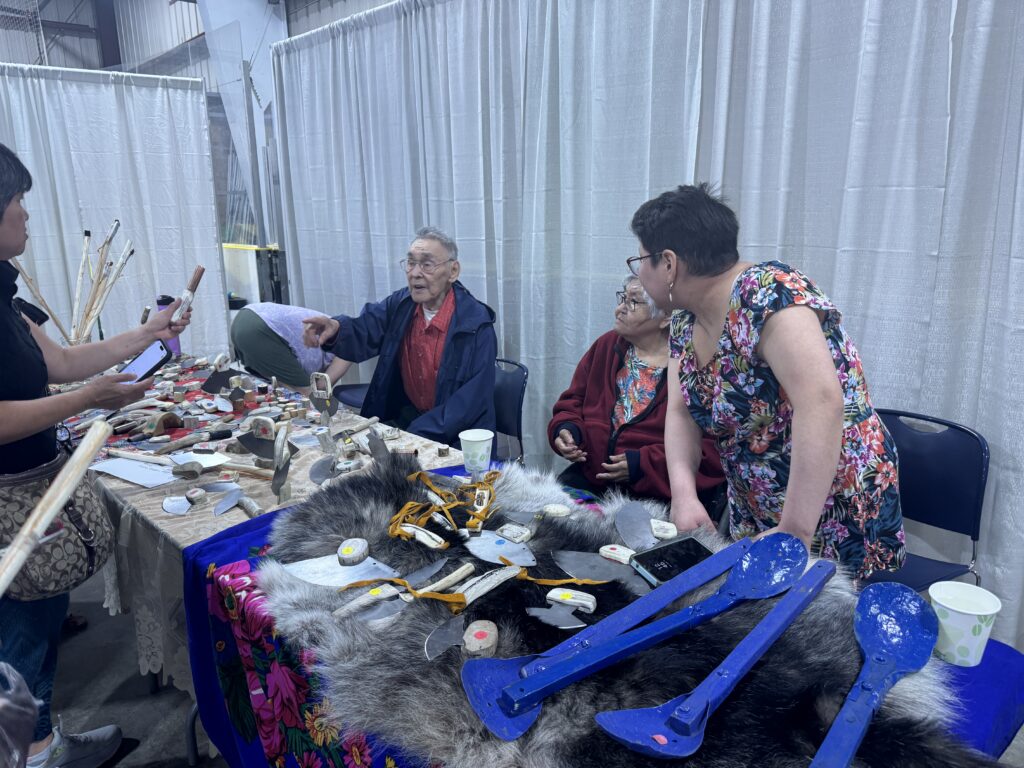
Beaders, jewelry makers, textile artists and painters all offered the best version of their craft. Even the elders were present with their handmade willow ice fishing poles and hand carved gutting knives. We wanted to buy fur lined moccasins and sealskin gloves, but they didn’t read Florida.
Over in the gallery, artists were dying hog gut with onion skins, carving animals from soapstone and tufting bear paws fashioned into bolo ties. They were making dolls and fur hats and up cycling jean jackets with cool fabric panels.
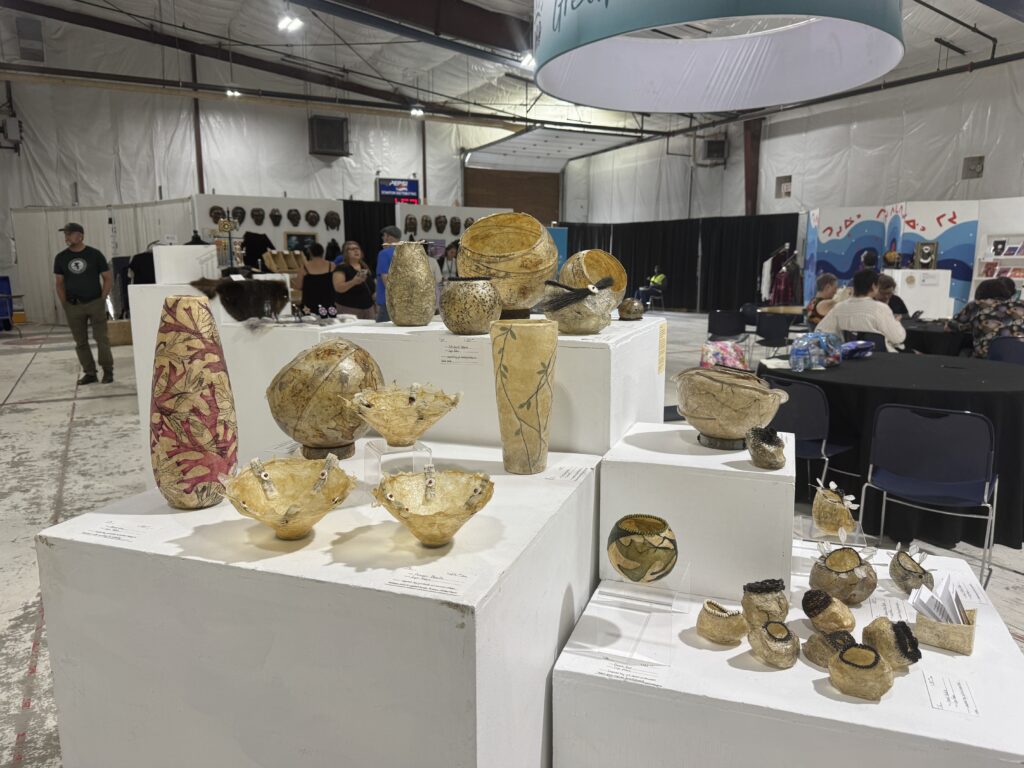
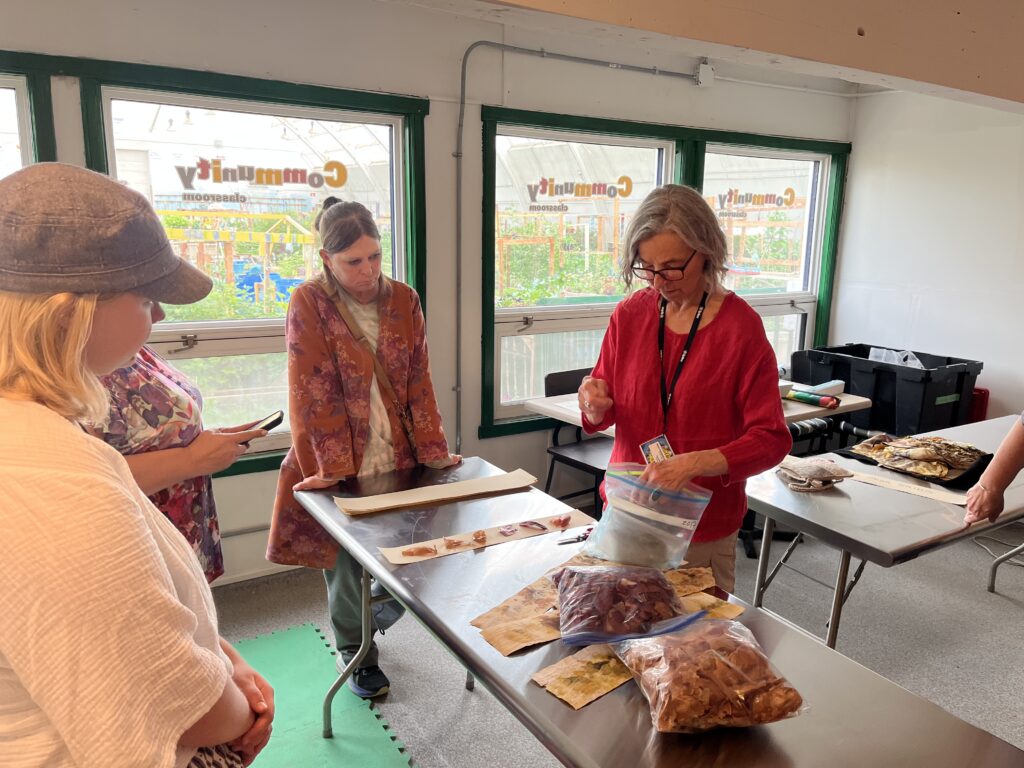
Swapping abstract painting for eco printing with onion skins, Whitehorse artist Lynn Fabio taught us how to use the paper skins of red and yellow onions on silk, wool, cotton and paper to make abstract prints. Basically you lay the skins on the dampened textile, cover it with plastic wrap, roll it tightly around a tube, tie it up with cotton string and drop it into boiling water for 30-45 minutes. When you unwrap it reveals a surprise design. The process does not work on any synthetic materials. Lynn makes a living selling scarves, quilts, wall hangings, and sweaters as well as her hog gut sculptures.
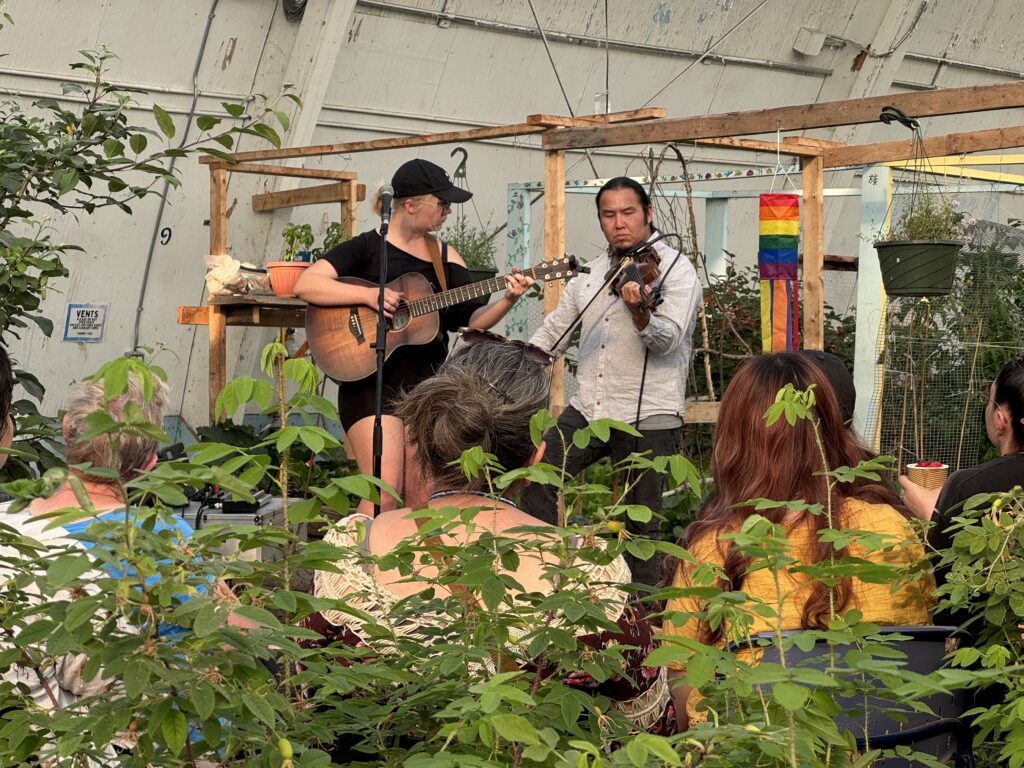
We met more people on this trip and had more meaningful interaction than on any of our other adventures. Gathering seems to make people want to collaborate and share. At Spoken Word Night in the Greenhouse, we vibed with aspiring poets, writers and musicians share their feelings about rage, privilege, sex, violence and love. At the arctic market we made three new friends from Saskatchewan!
Inuvik is the cultural hub of the Western Arctic. It’s a town of 3500 hardy people who are always celebrating something. Whether it’s summer’s midnight sun or winter’s noon moon, the people keep spirits high through gathering.
So what were we thinking when we put a pin in the Arctic Ocean? Everyone asked us “why?” We said “why not?” We like extremes. If it’s remote, we’re interested. If there’s a story or event or an in-the-news angle, we want to check it out. Everyone has a travel brand and ours has been effort-filled curiosity. So the “why” has been a gathering of experiences in places foreign to our limited world view. After this epic journey we think we may be ready to shift our why to include effort-less.