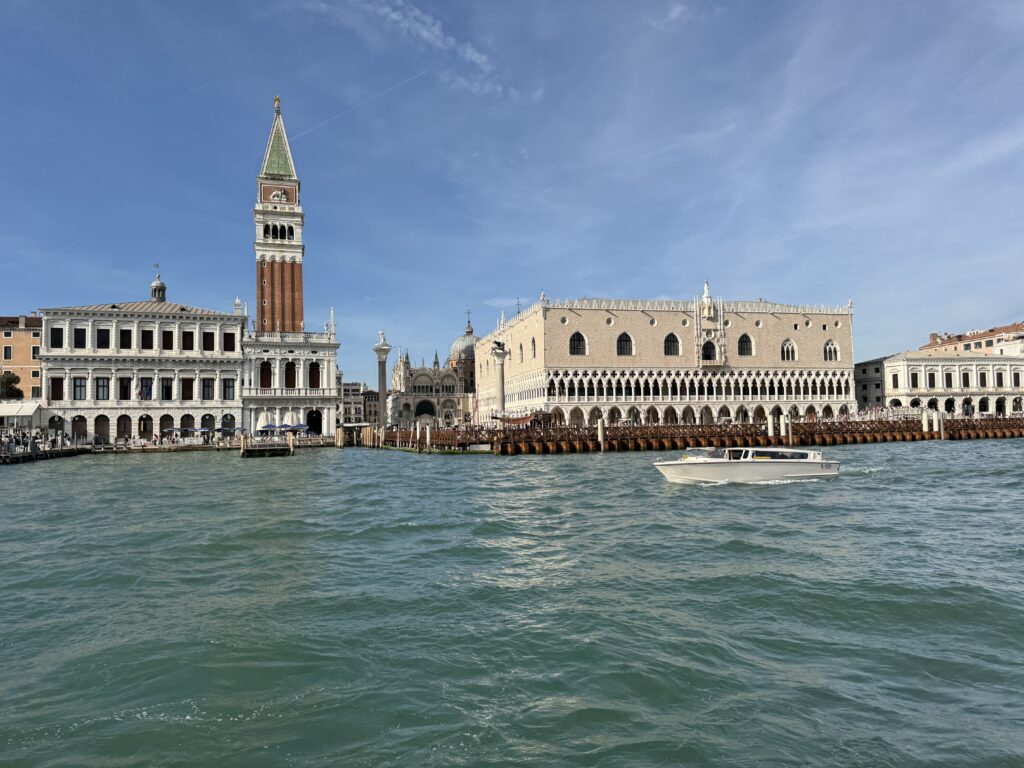
It’s a tough world out there with war, hunger, and all other terrible things gong on. What is Venice, the Queen of the Adriatic, the Floating City, the City of Bridges, the City most Serene, destination for celebrity weddings and star-studded arts festivals to do? Biennale 2026, of course. A collective manifestation of creative beauty produced despite the world’s political spectale. (Whew! We lifted that from the brochure) Since Sheric was not invited to Venice’s Bezos/Sanchez wedding, we invited ourselves to this art exhibition that takes over the cities 118 islands that comprise historic Venice.
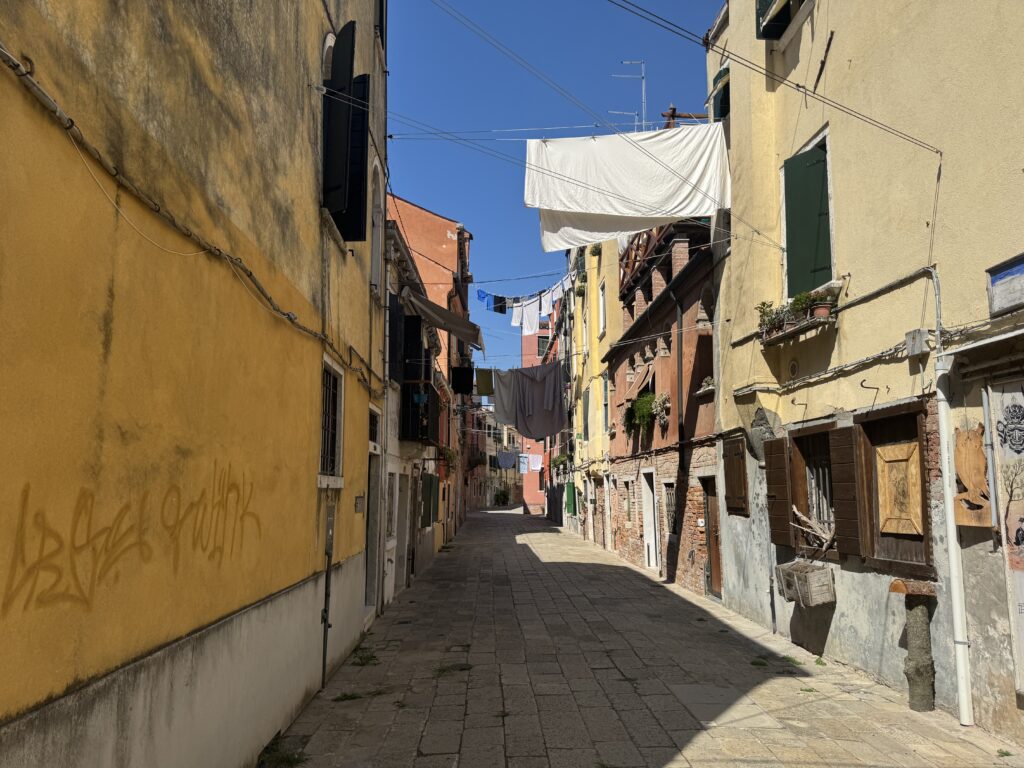
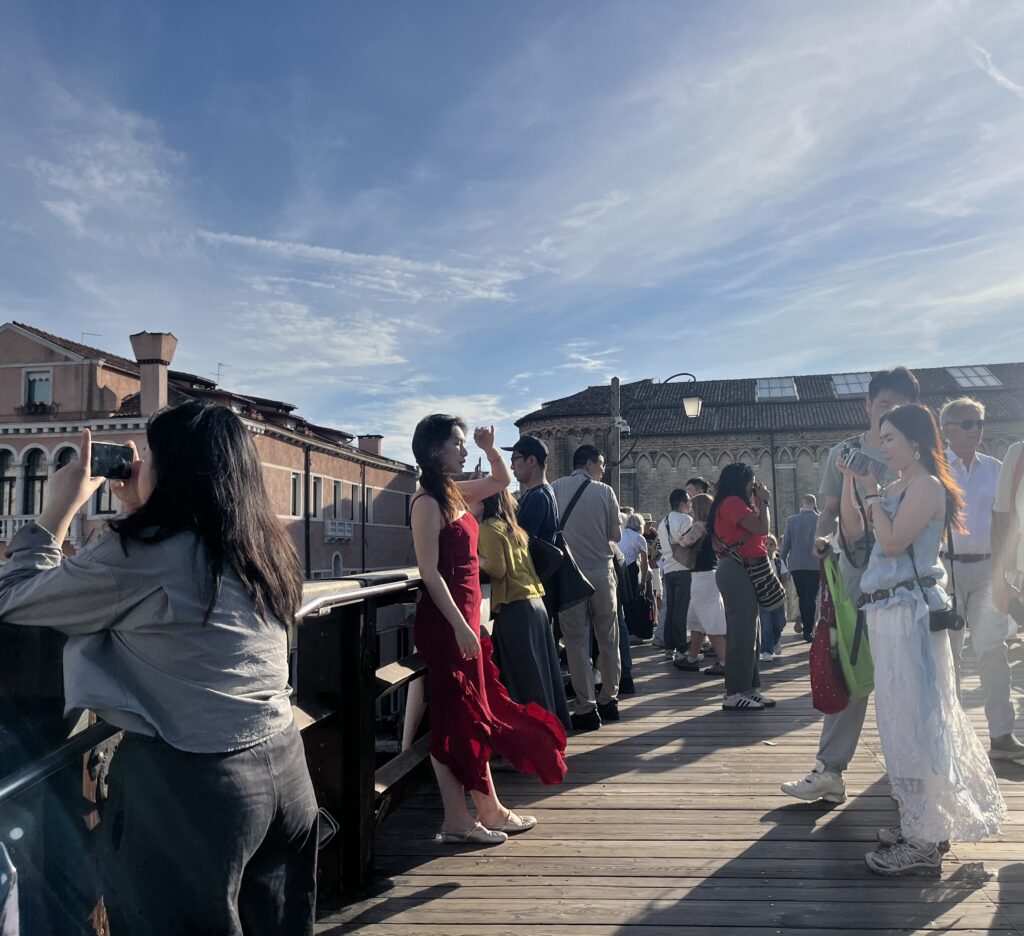
It’s 20 minutes on the bus to Vicenza ($3) and 47 minutes on the regional train ($9) to Santa Lucia station butting the edge of the Grand Canal in the historic island center. Autumn cooling unleashed the travel bugs and the city was swarming in tourists keen to test the limits of their iPhone storage. Videos of gondola rides, selfies from bridges, endless pictures of gothic architecture, laundry hanging from balconies across narrow cobblestone streets and pizza pies at outdoor cafes.
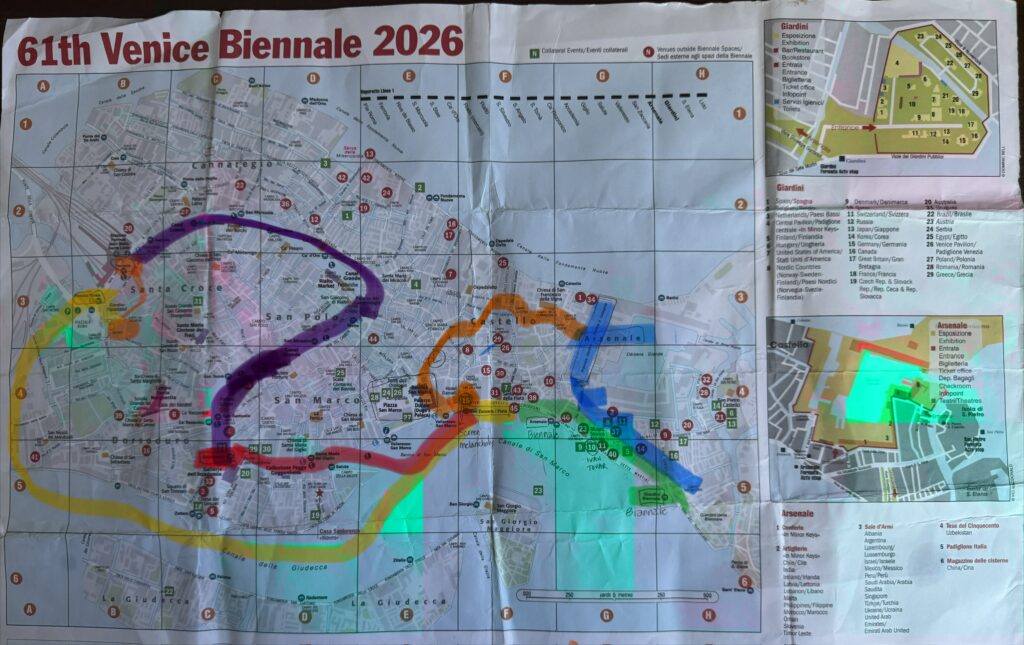
With no internet and a notebook with walking directions to a few bacari and Biennale collateral events around the city, our destination was The High Italian Craftsmanship Fair, where over 160 master artisans from across Italy gather to demonstrate the art of making. Not officially part of the Biennale but on brand for Sheric Adventures. It was a destination that ultimately proved too hard to find, but in the attempt provided a leg aching tour of the sestieri, proving that getting lost in Venice’s six districts is easier on the eyes than the calves.
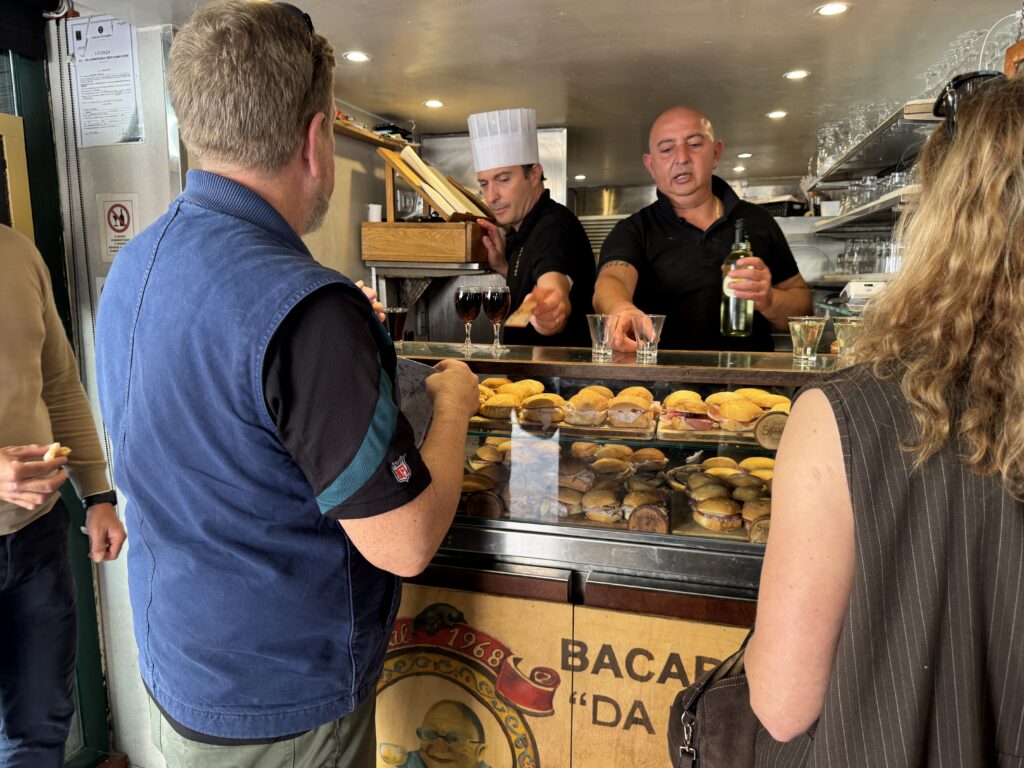
The Bacareto de LeLe was our jumping off point, just a half mile walk from the train on the other side of the canal into the Santa Croce neighborhood. Instead of espresso and cornetto, we opted for a traditional Venetian crawl through stand up counter shop offering ciccheti and ombre, aka finger foods and small plastic cups of cheap wine. LeLe is one of the last of the watermans’ dives. It opens at 6am to working class men who begin their day with conversation over wine and a mini-meat sandwich.
Historic Venice is a tourist town. About 25,000 people live here, and about 10,000 to 50,000 tourists depend on them for a spritz, pasta meal, or clean sheets each day. Around the big-name choke points in the Cannaregio, the crowds had us longing for Inuvik. But a two minute walk off the famous piazza of San Marco, and somehow Venice went back in time to empty alleyways, tranquil canals, and impossibly cute shops.
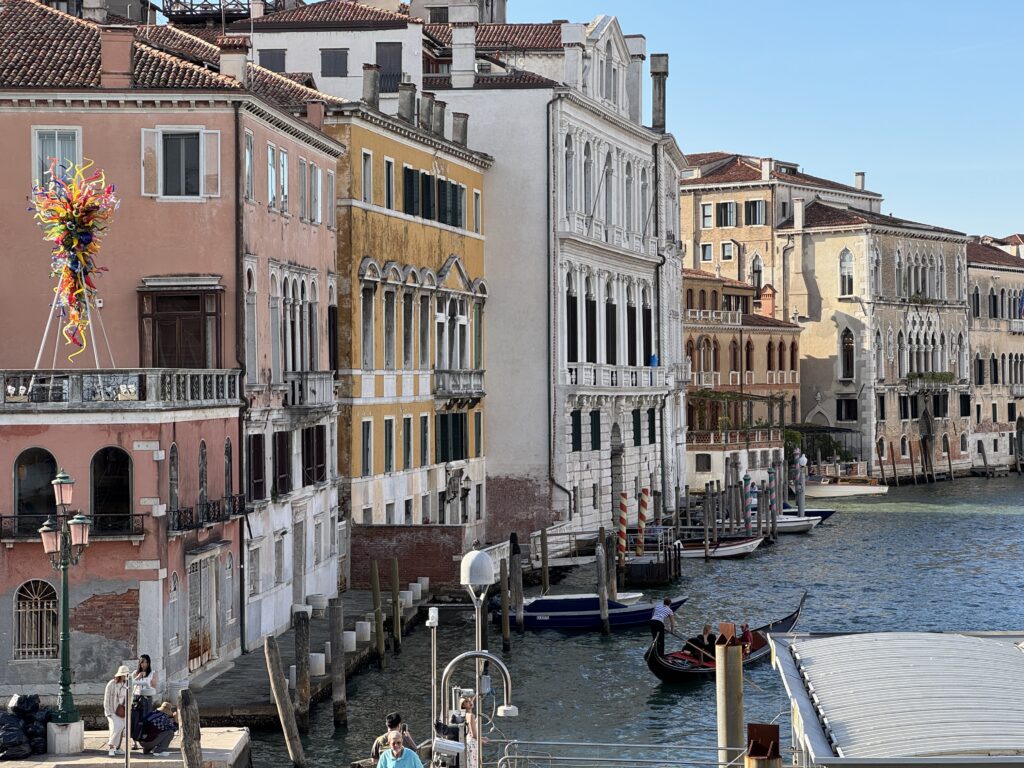
Unless you are George and Amal Clooney effortlessly traveling in a vintage wooden water taxi, crowds are going to be part of the day. With a map of Biennale installations to go with our AI walking directions, we pushed through crowds, crisscrossed bridges over canals and down movie set alleys lined with colorful homes built over stone laid on wooden piles in soft lagoon mud. It wasn’t the most direct route, but that’s the experience of getting lost and found on the way to an unsatisfied appetite and gratified checks in the box.
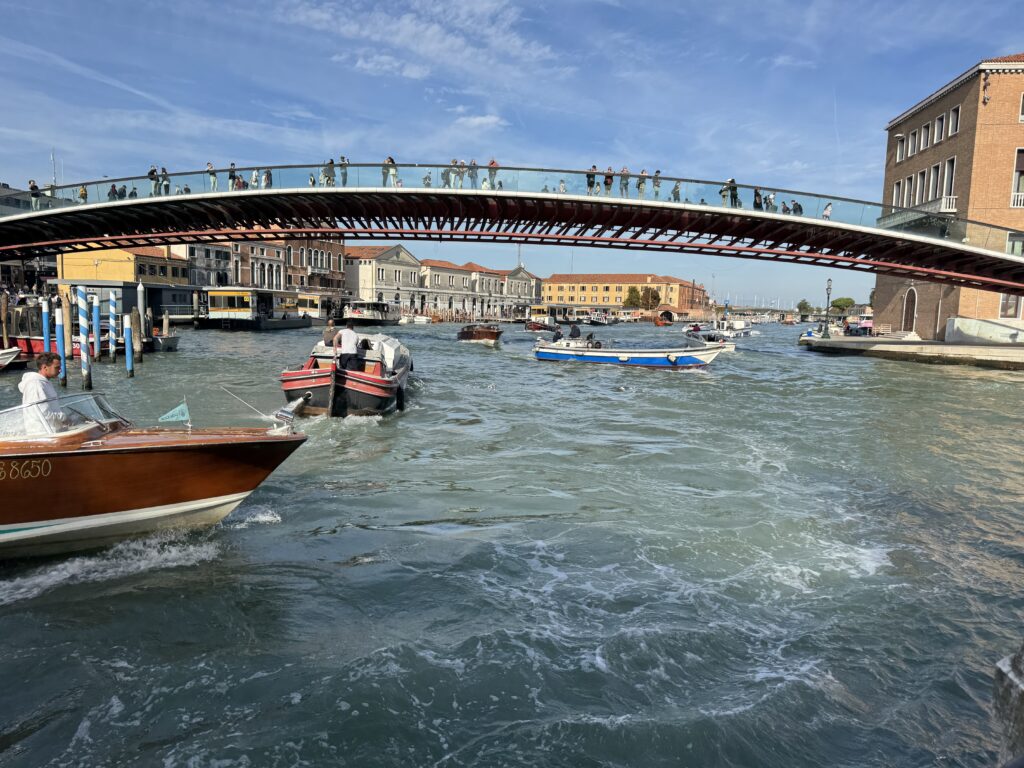
The Vaporetto is the public ferry system connecting central Venice to everything else. 9.50 euros each way or 25 ($28) for an unlimited day pass per person. Intent on maximizing our dollars, we pier hopped on the 2 line for 30 minutes to San Zaccaria to see artist Li-Yin Fan’s critically acclaimed film at the Taiwan pavilion – Screen Melancholy, said to explore the anxiety, disconnection, and melancholy caused by prolonged screen use, algorithms, and artificial intelligence. AI walking directions sent us east past the Doge and the Bridge of Sighs along the canal. 4,000 steps later we were at the Giardini, aka wrong place, wrong time.
The Biennale has two main venues. Giardini is the farthest and sits in the green space created by Napolean’s order to drain the marshland and create a public park. About a hundred years later the first exhibition took place and was so popular that developed countries started constructing their own buildings in the park to showcase their national artistic identity. And so the Olympics of Art was born.
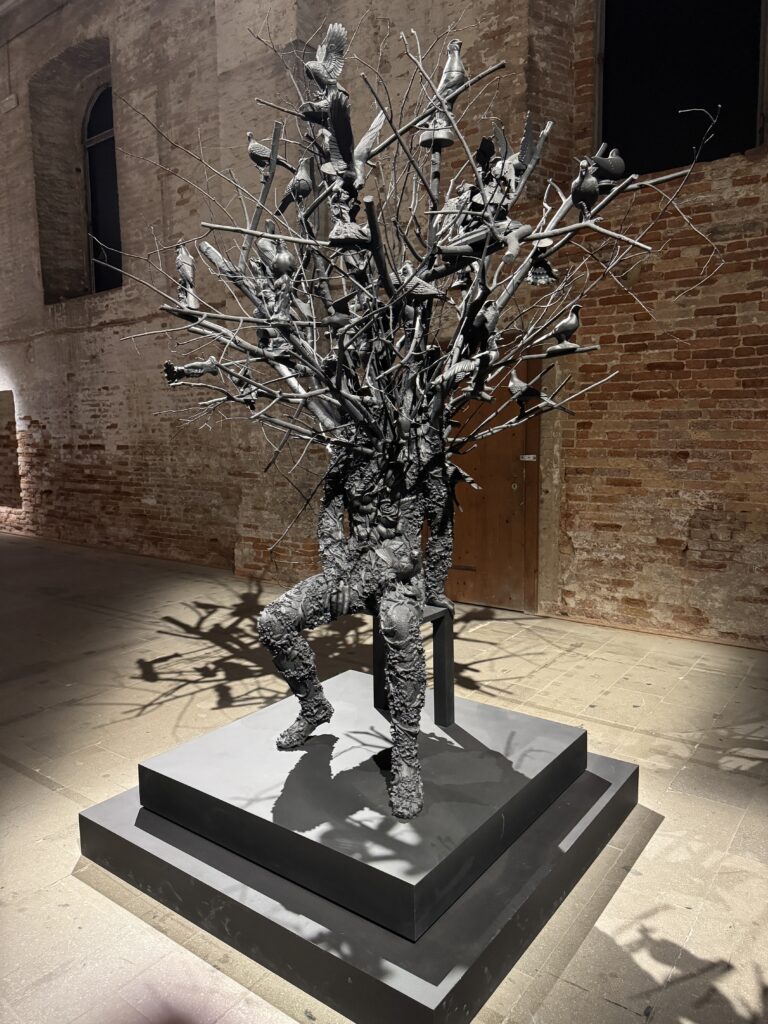
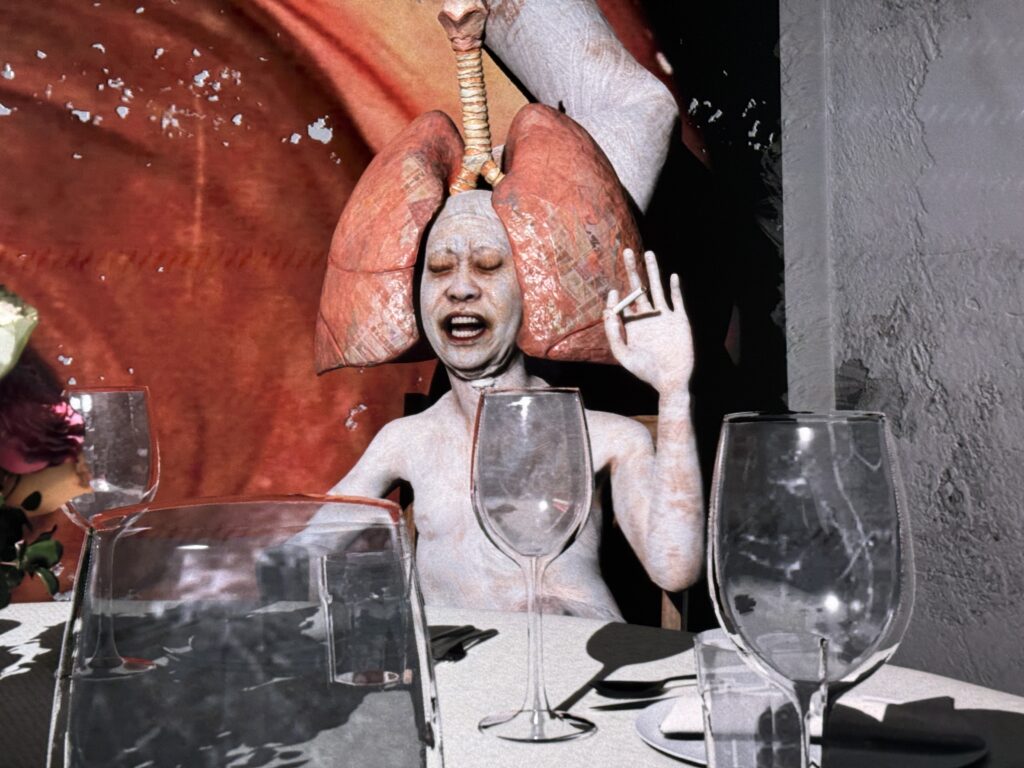
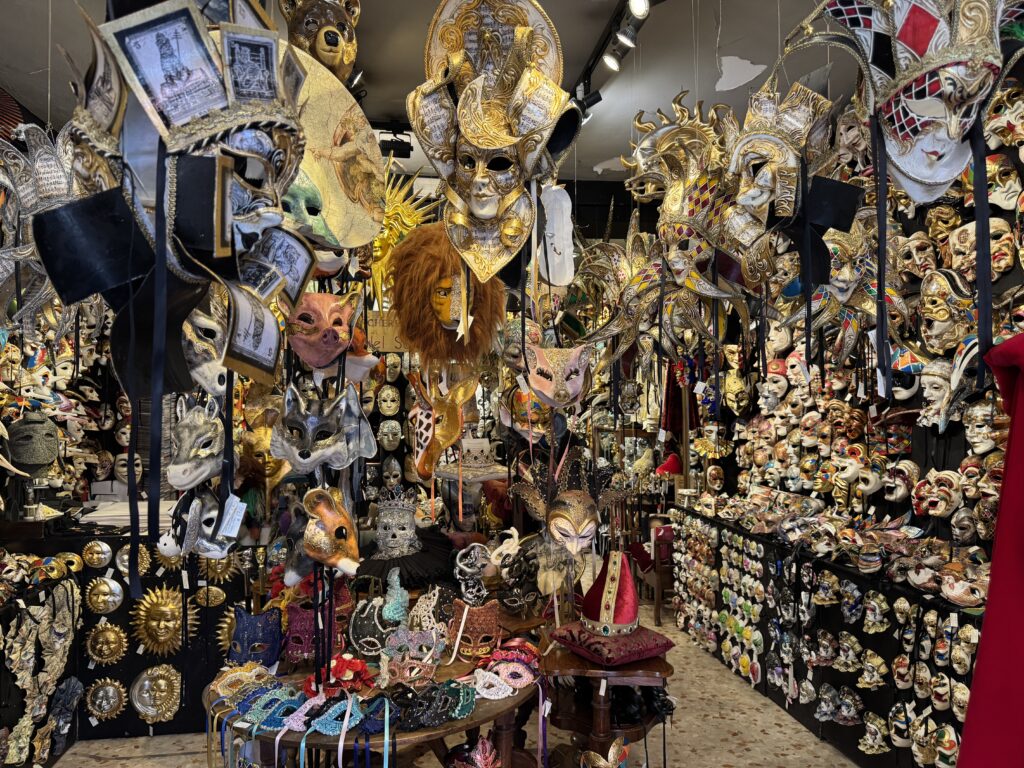
Every other year nations choose artists to contemplate social, political and environmental issues related to an overarching theme. In between years is the Architecture Biennale where these same nations contemplate how the built environment faces global challenges. The right would call it a dumping ground for woke ideology. The left would say it’s a vital forum for inclusion and global dialogue. We say it’s an overwhelming mix of random stuff scattered over the City of Masks.
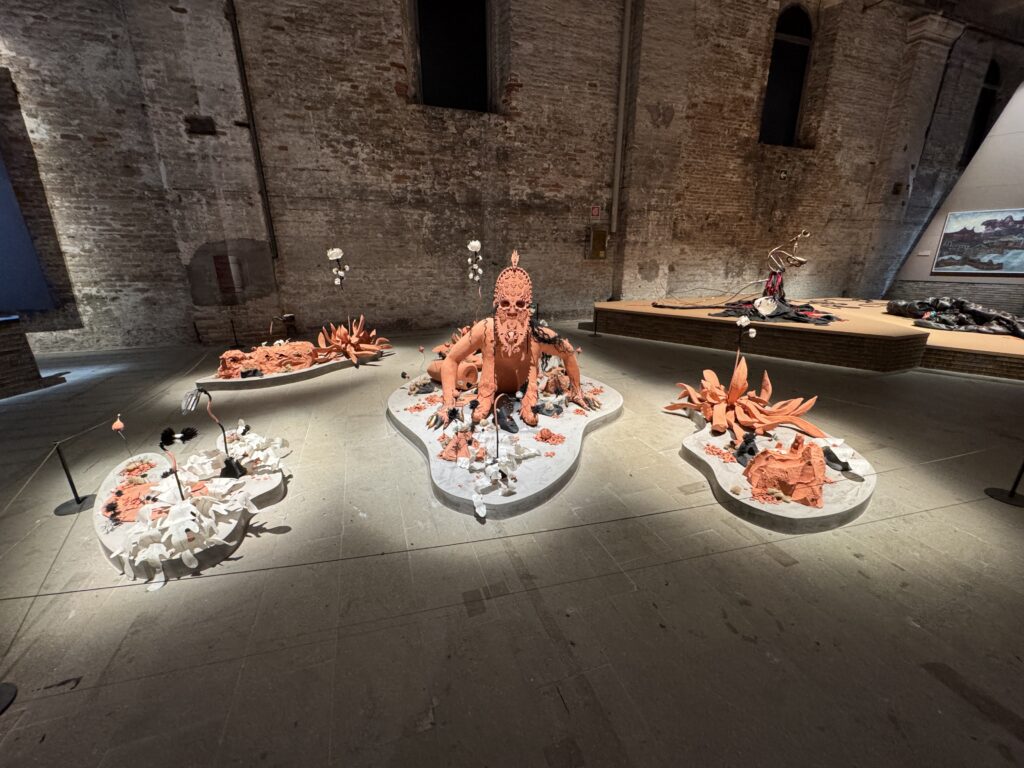
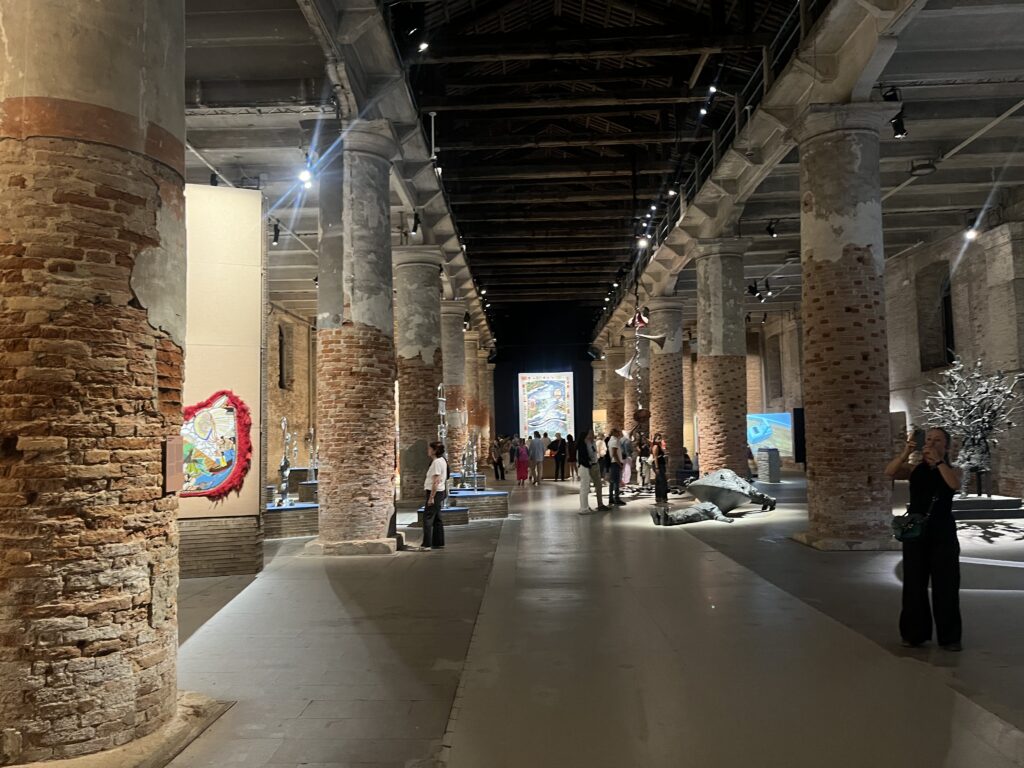
After the Vaporetto ride and hike to the wrong location, we threw in the towel on our plans and let Venice take the lead. In the massive Venetian Arsenal where it is said that a new war ship was built every day when the Military Republic of Venice ruled the Adriatic, we found the Biennale installations from the developing world. The world’s first industrial production facility was the perfect venue for big artistic statement pieces that did not hold back with their critical messages to the not-third-world. What those messages are we can only speculate. Interpretation is in the mind of the beholder.
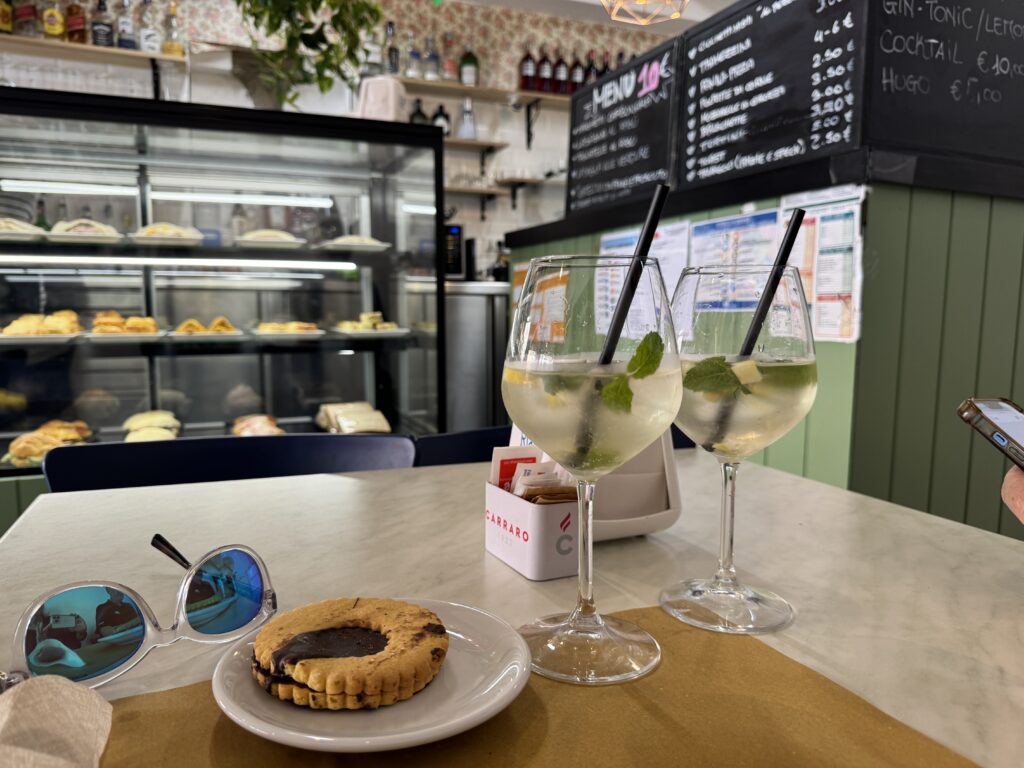
Trading avant-garde for mainstream, we channeled our inner Venice and effortlessly found our way through unmarked streets and crooked alleyways. It helped that we turned on a cellular data plan and had access to Google Maps ($12 a day). Venice’s charm also helped, as did a light meal of lasagna paired with a Hugo spritz in a bacaro with no name and friendly staff.
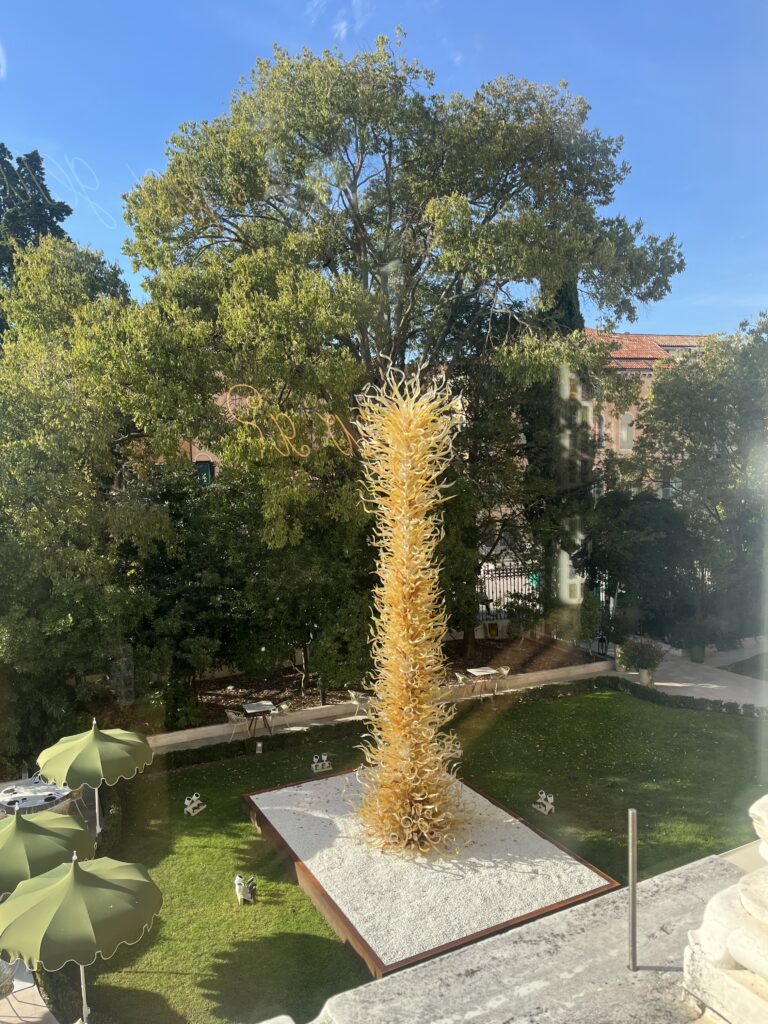
Rejoining the crowds, we forced our way on to the Vaporetta water-bus Italian-style during the crowded late afternoon rush and moved up the Grand Canal like commuters on The A Train in Manhattan. Jumping on and off like pros, we found the Chihuly glass installations and a hole in the wall bacaro where the prof’s hang out in the Academia district sipping wine and noshing on cicchetti.
We moved our return train departure time as late in the day as possible to still find a bus ride home as our step count approached 18,000. Out of Motrin and time, we arrived back at the train station with only enough time to split a cannoli and sparkling water from one of those 25,000 a hard working residents who lived there. He said he spent his mornings making pizza, his afternoons making cannoli, and his evening sleeping by the oven, so he too was ready to call it a day.
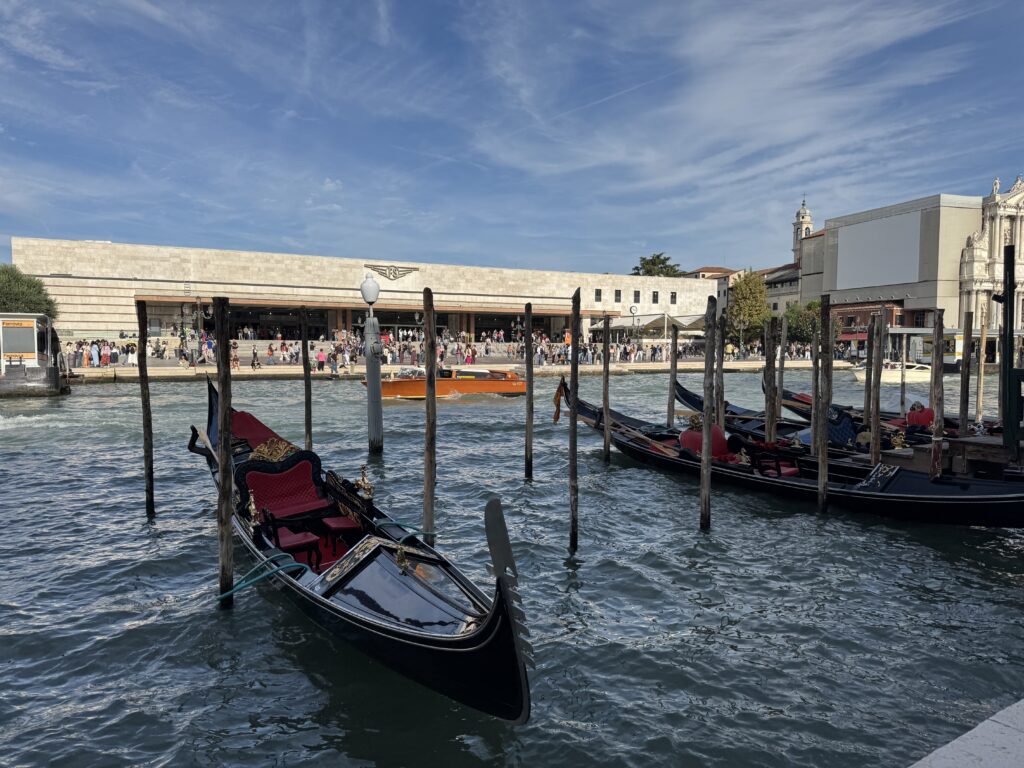
Venice had been overwhelming but not entirely in a bad way. If our big bet on crypto pays off, we may summer at Doge’s Palace with Jeff and Laura. If not, we may head back for another bite of the apple during this Adventure. As the pain in our calves from crossing the 400 bridges fades, we find ourselves thinking back to the private alleys, dramatic art, and Venetian vibe. Next time, less steps and more sips.