Banff. When you say the name the angels sing. It’s the national treasure of Canada. With 5.2 million tagged posts, it is the most instagrammed, most visited, most symbolic badge of accessible geologic beauty in the country. It has a reputation for being overcrowded, over commercialized and overpriced, but it is nevertheless, a beacon for a global audience of bucket list checkers.
We debated the visit. As escape artists we run from crowds in search of wide open, solitary spaces. But we also brake for opportunities and oddities along the way. With Banff clearly en route to the Arctic, should we stop to report on the hype or pass by and give those days to something undiscovered? The lottery decided our fate.
In order to camp in Banff, you set an alarm for February 12, 2026, 11am EST and log on to Parks Canada website. We entered the queue separately, Sheri at number 52,397 and Eric at 7,340. His wait was 11 minutes, hers 2 hours. When his number came up, he took down Waterton Lakes, then Banff, then Jasper, then Kluane. We had an outline to build around, with two nights in Two Jack Lakeside, a few miles from downtown Banff and two nights in lucky Lake Louise, 30 miles north.
Leaving Interlakes we’d pass through Canmore, a bustling ski town 20 miles shy of the big dance. Both Morocco at the Waterton dishwashing station and Cindy Kananaskis agreed that Canmore was a cute town not to be missed. We made a list – gas, propane, groceries, laundry, beer, a hoodie and lunch. Canmore was as cute as promised but more crowded than Disney at spring break. Eric pulled the T@G to places it should never go, checking everything off the list except laundry and lunch. It was the stress of small streets and wayward walkers that brought Sheri to plead for dirty clothes and a hungry belly.
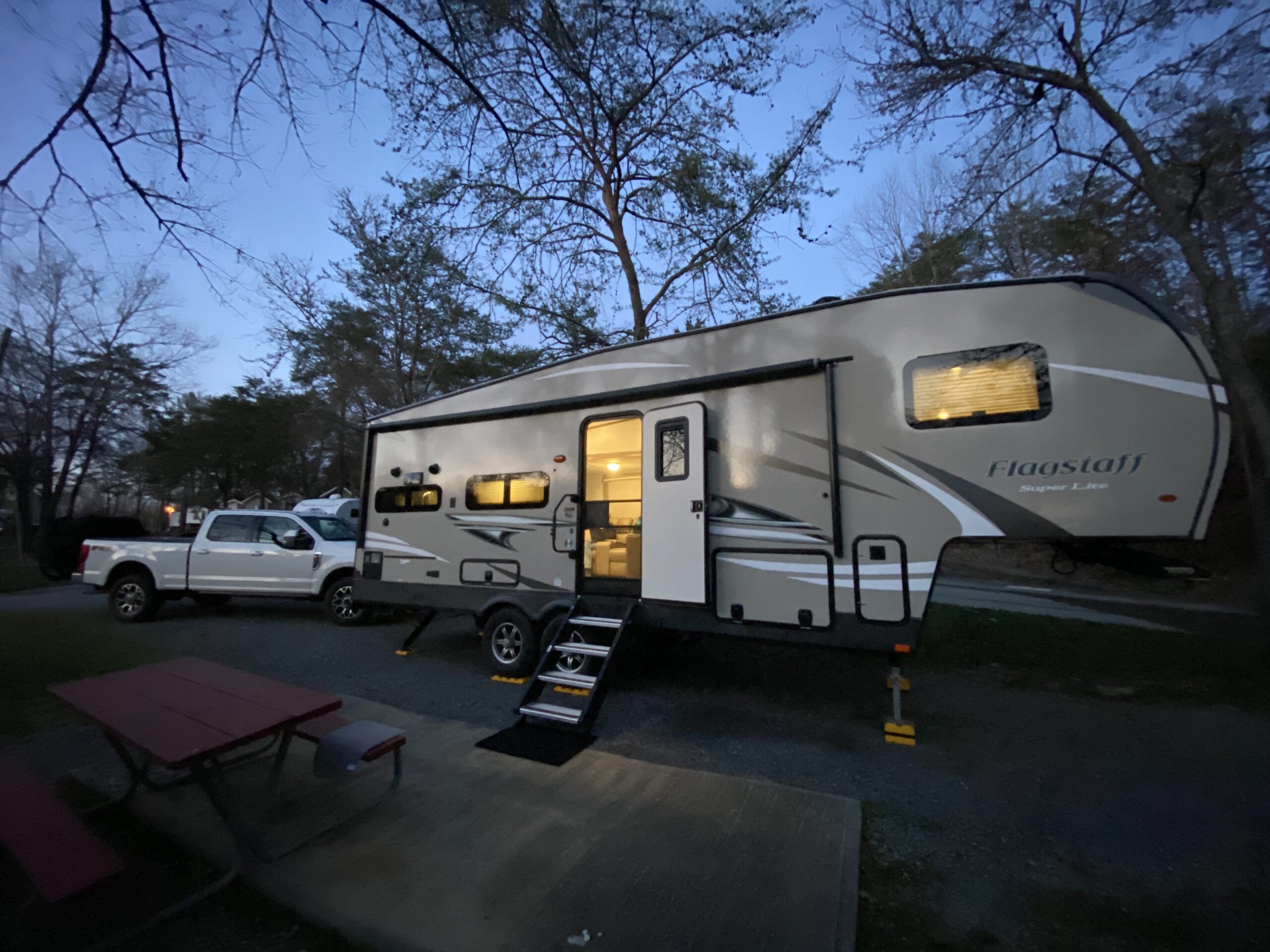
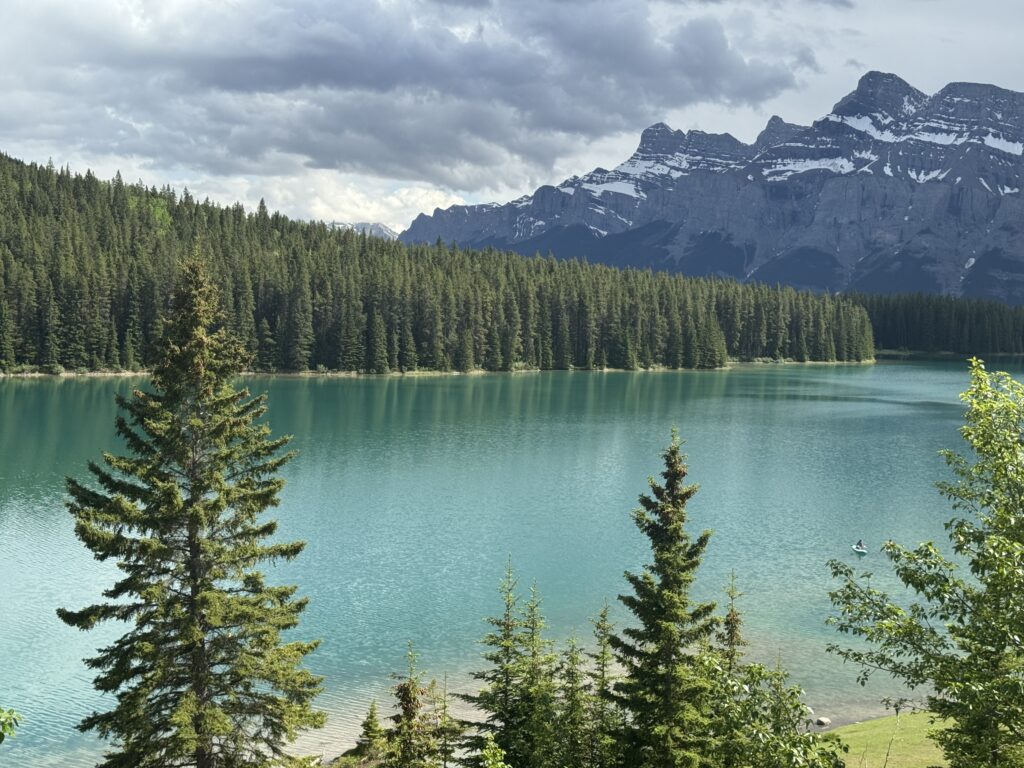
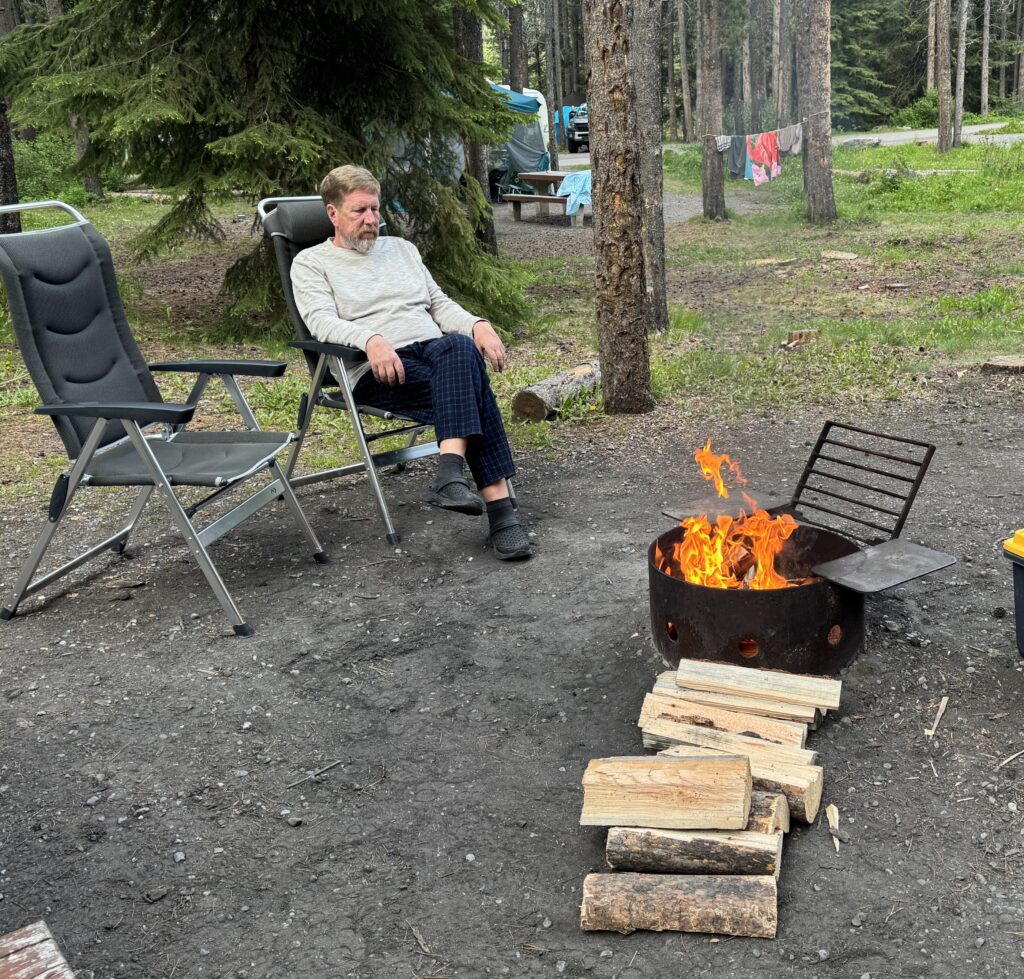
If you win the Parks Canada Lottery, the guidance is to take down a site a Two Jacks Lakeside, the closest and most scenic campground near Banff, so we did. Surprisingly, Two Jack Lakeside is not the kind of campground we are used to in a National Park. Is it uncared for and overgrown or wild and natural in a Banff kind of way? True to the reviews, it is on a lake and directly outside Banff. But the sites are close together and near an access road. After three days without water in Kananaskis, we did not care. There are hot showers, flush toilets and a dishwashing station. A fire permit entitles you to unlimited firewood, so Eric has taken to building raging bon fires. The goal is to empty the giant wood pile. Generators are allowed, but Sheri makes Eric pull into heavy equipment parking lots far from the camp to re-up the batteries. We’re no vibe killers. Soundscape matters.
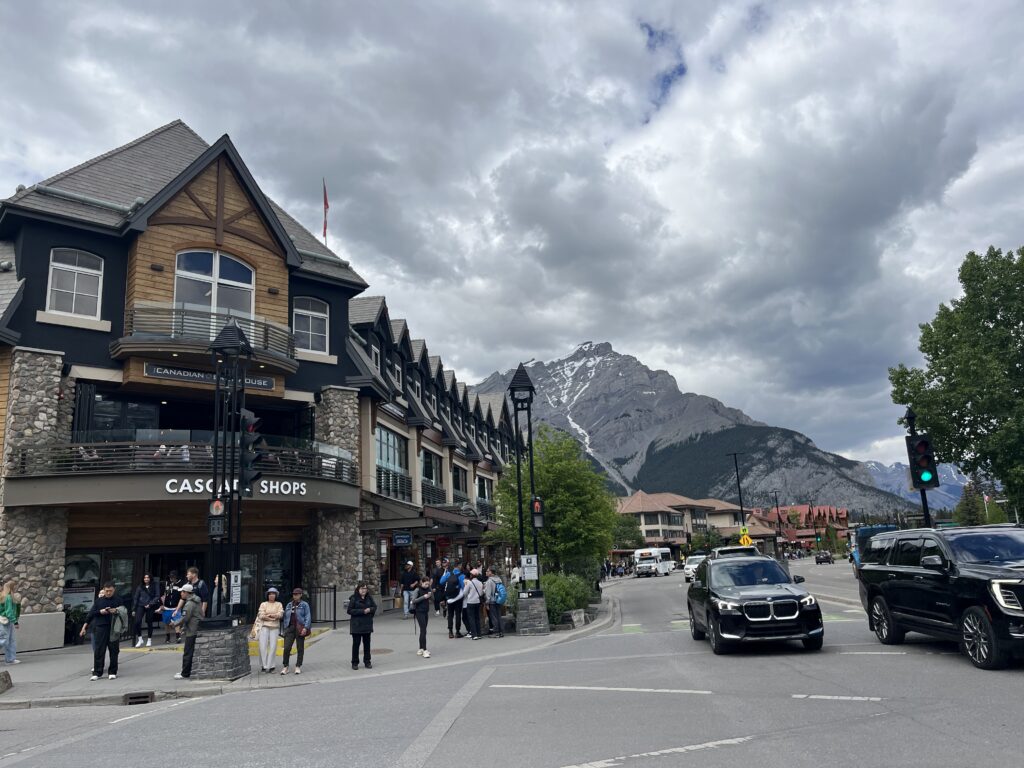
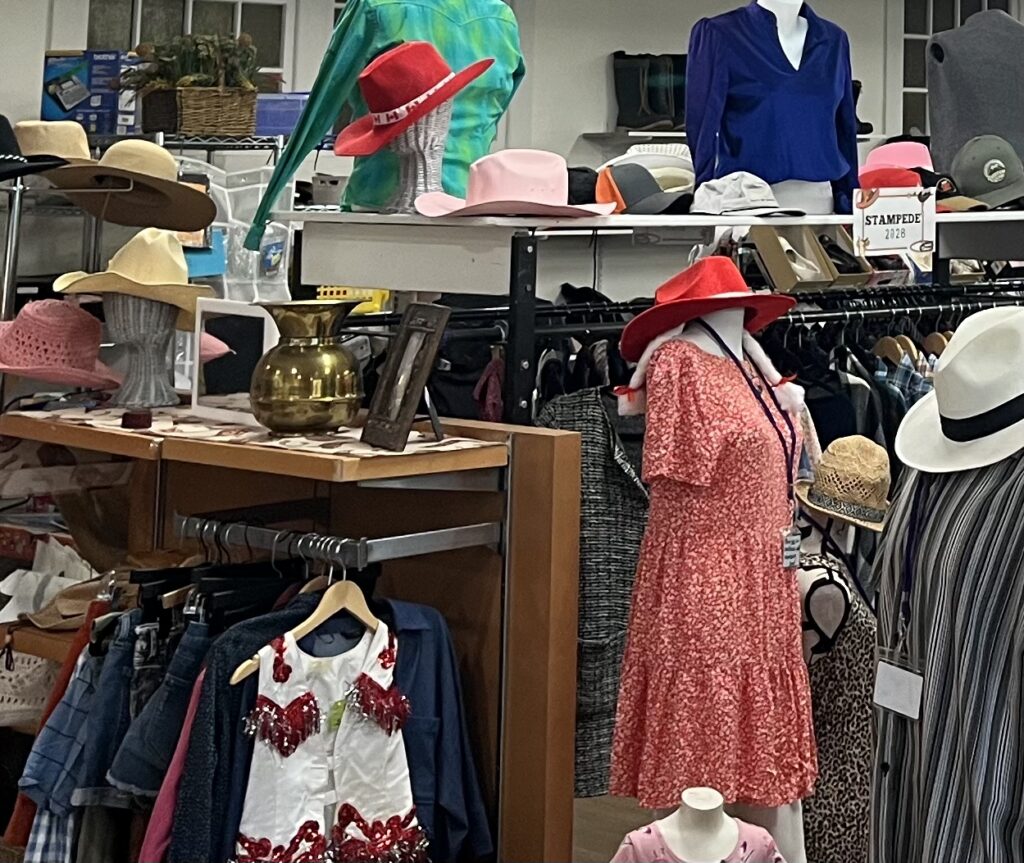
Downtown Banff is a tourist destination revolving around retail, restaurants and recreation. License plates are Alberta and British Columbia. Tourists are from all over Asia. Tour bus riders are white senior citizens. GenZ’ers sport back packs and hoof it. Every cuisine and outfitter brand is represented along with rentals for bikes, boats and bus tours. With a crowd belting out “Sweet Caroline” from the second deck bar of The Elk and Oarsman, we hit the less populated attractions like Sunshine Coin Laundry in the basement of the mall, the Rundle United thrift shop in a church basement and the public library in a senior center basement to charge phones and look at books about the Yukon. We are capitalistic rejects in a retail paradise, but we have fun window shopping.
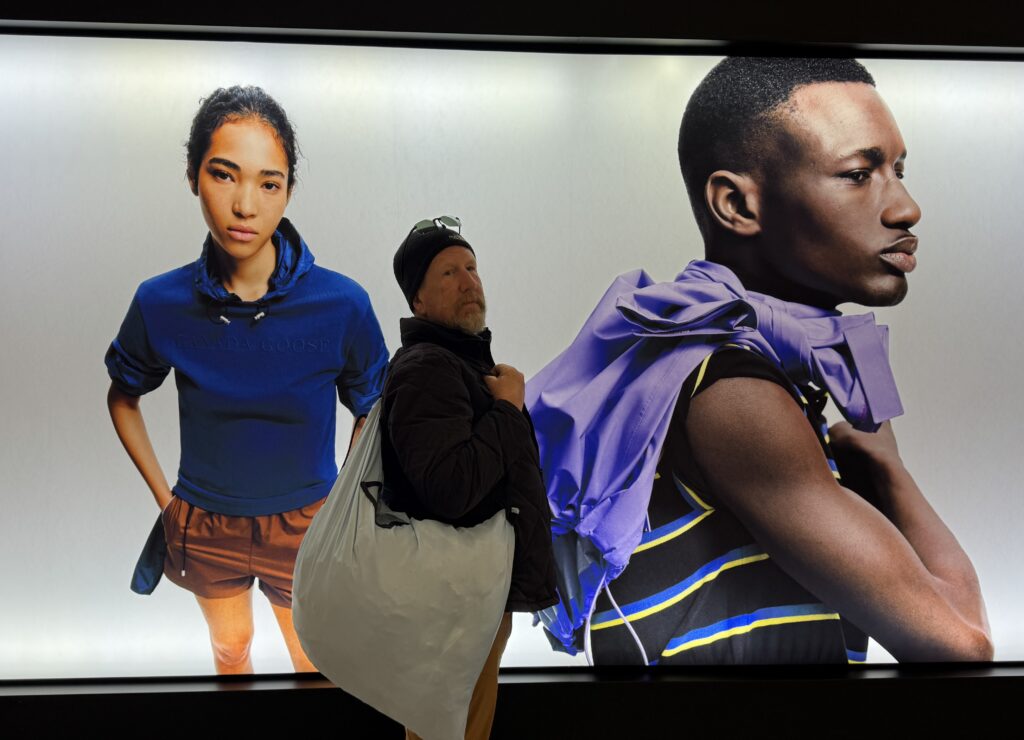
Oddly, some of the retail companies that we would never shop in we own in retirement accounts so we checked in on their inventory, traffic and shopping bag count. Banff is a tourist town immediately recognized as such by anyone that has been to one. They come in so many varieties, sea shore, mountain and amusement park. It’s good for a day. You cannot imagine living here – although it seems some do.
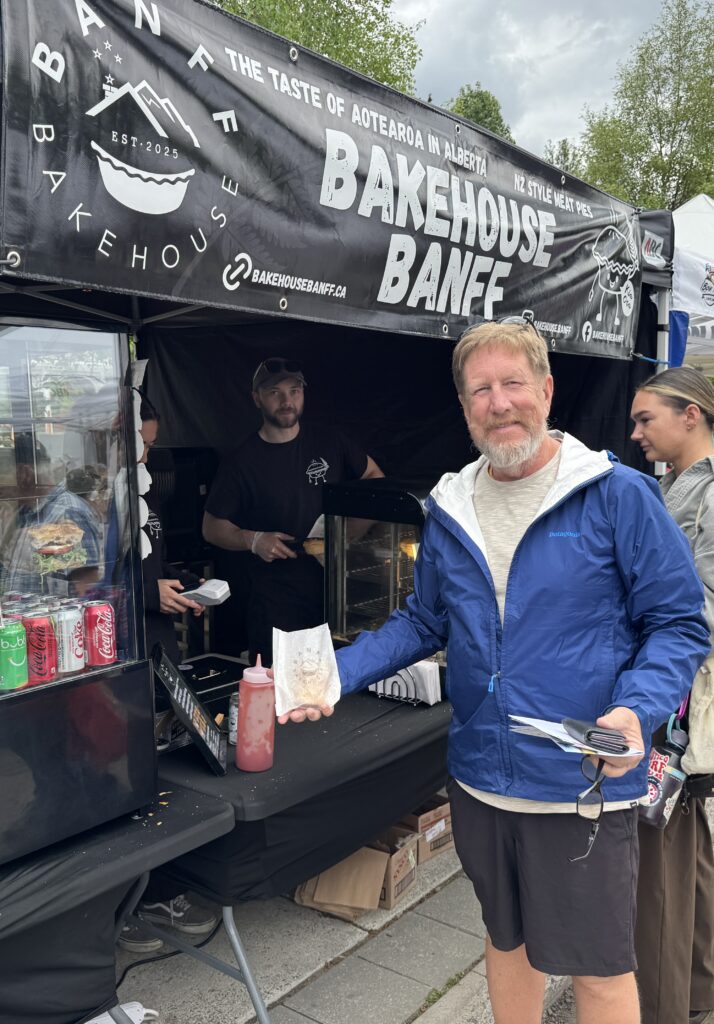
Lucky to visit on a Wednesday, we shopped the Artisan and Farmers Market for a taste of New Zealand in the form of steak and caramelized onion in flaky crust hand pie from Bakehouse Banff but skipped the hurricane ice cream cone for a walk through the IGA bakery.
Signs direct tourists to stay in the touristy areas, dine in the touristy eateries, and travel on the touristy shuttles. You can love it or hate it, but it is a real necessity when a town population is dwarfed by the tourists 5 to 1. In fairness, it is all done well. Very courteously. Very Canadian. It works. Tourists actually wait at the intersections for the white hand to tell them to cross. They don’t j-walk. They obey the hand!
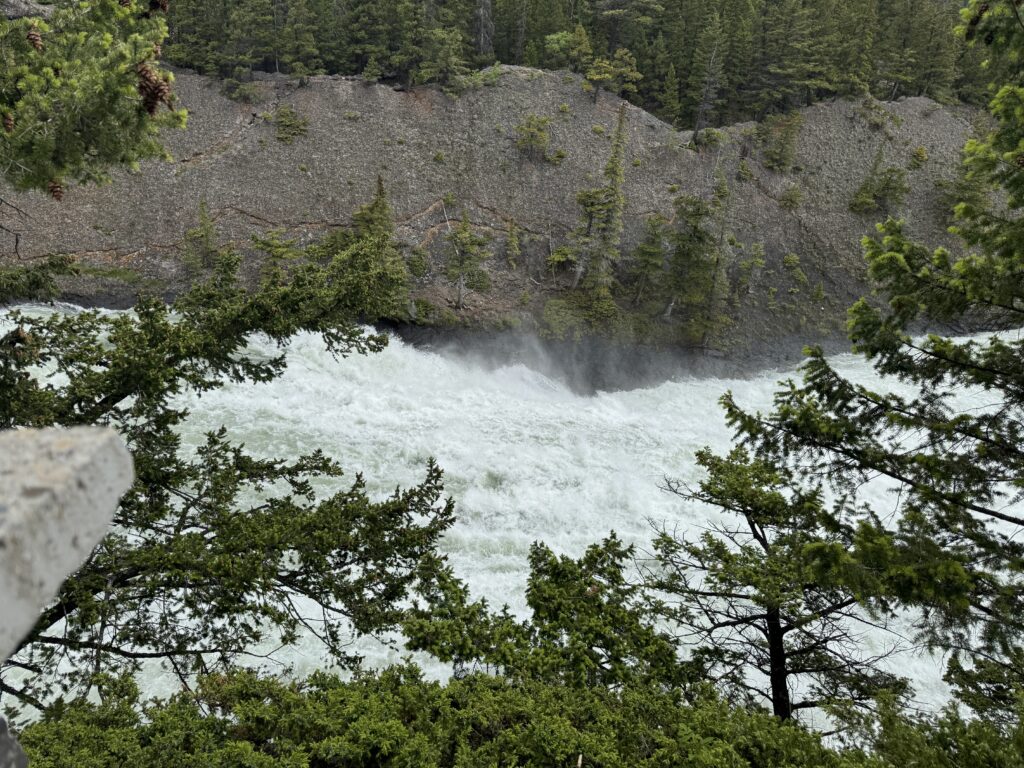
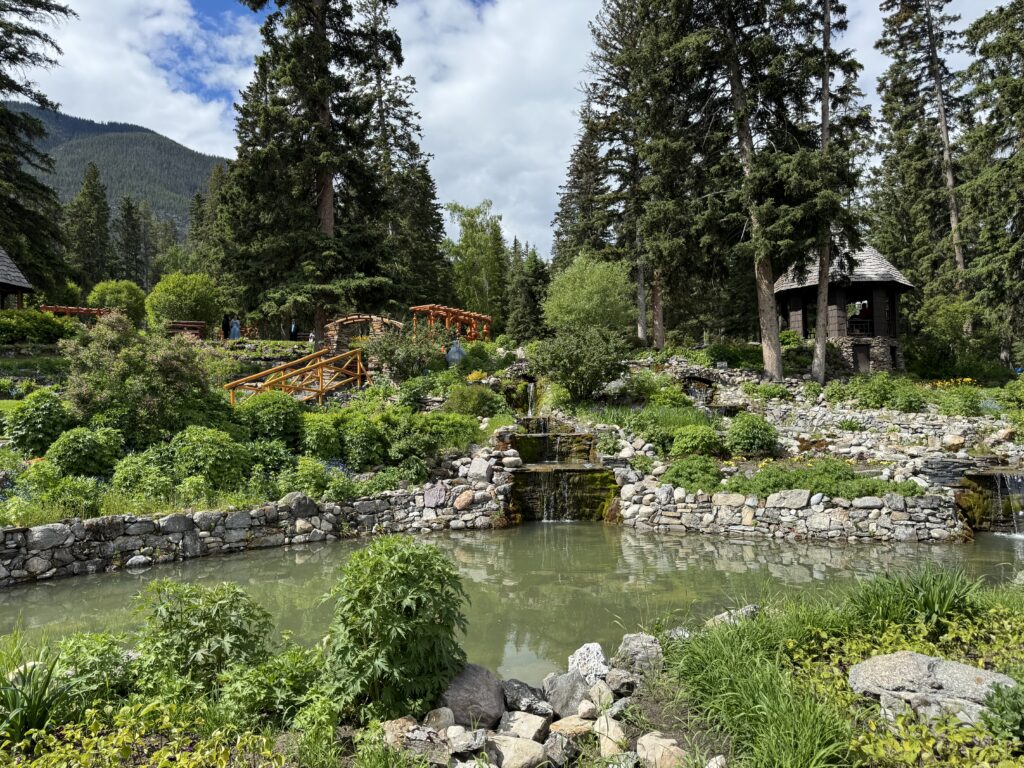
Southern Banff is about Johnson and Minnewonka Lakes, gondola rides and the Tunnel hike. We took the five mile hike from free parking behind the train station to Bow Valley falls to see rushing white water and the Cascades of Time Gardens to watch families line up to take photos of each other.
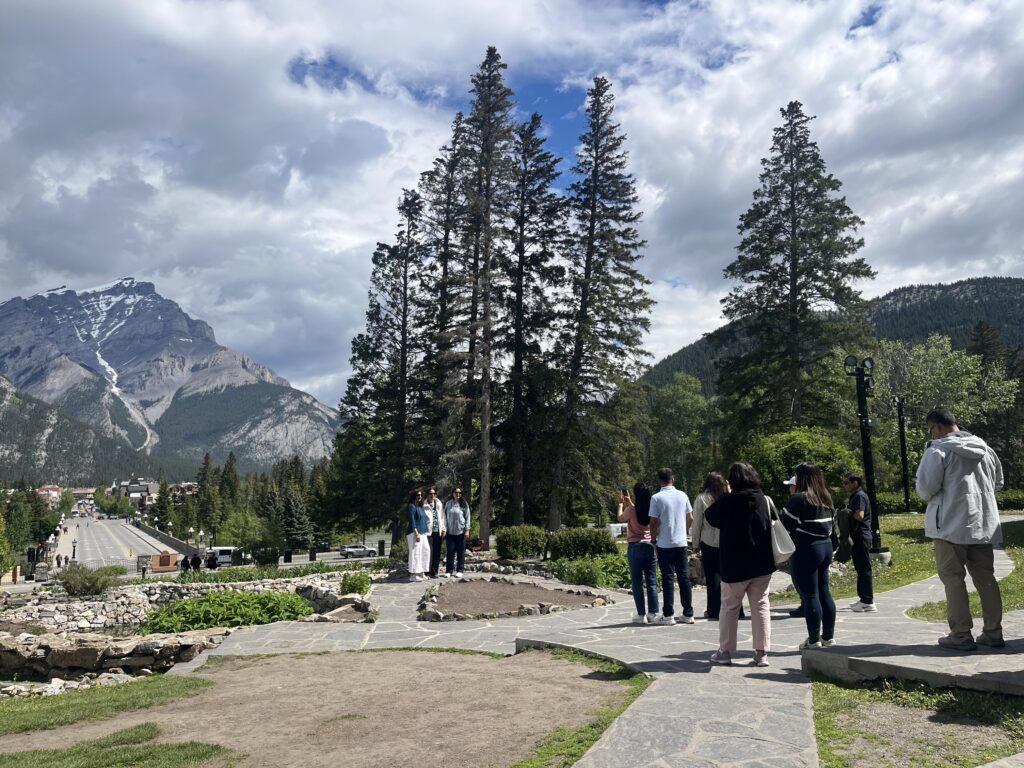
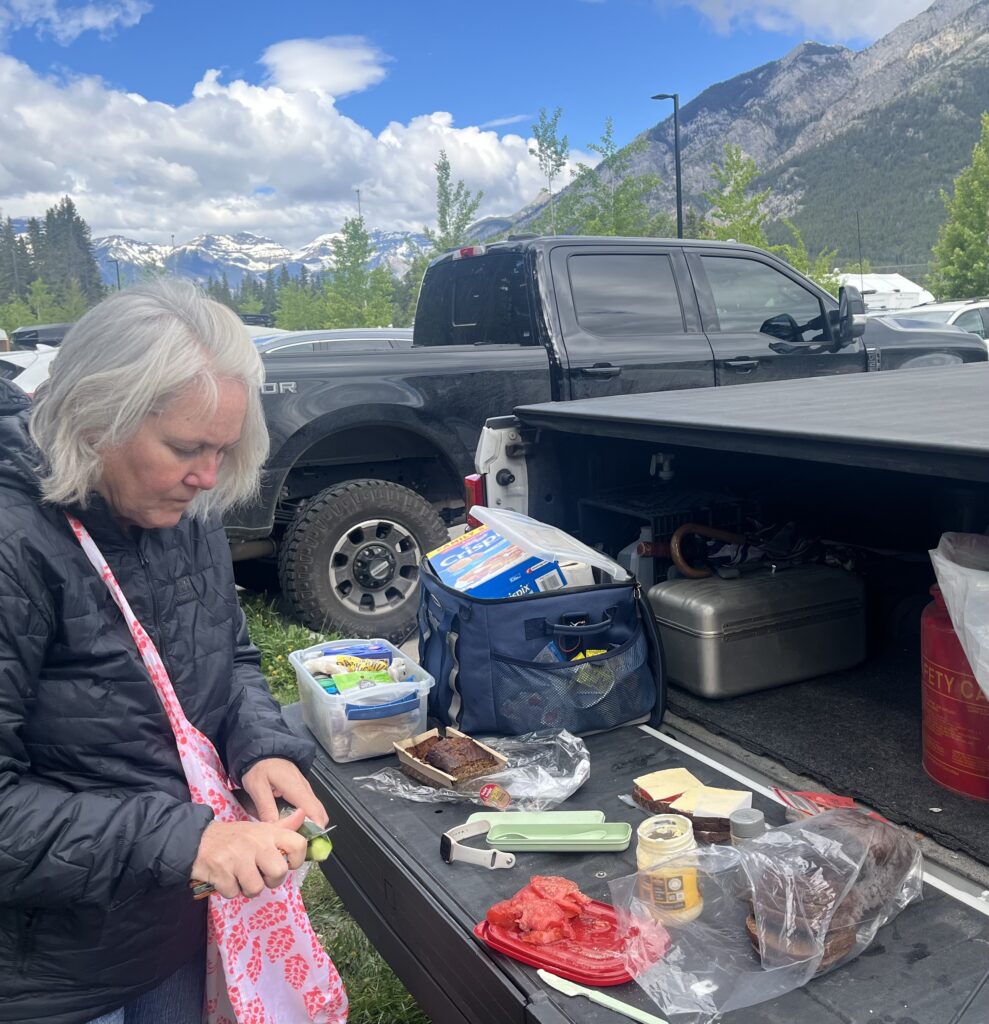
It’s a kilometer or two out of town and just far enough that most tourists won’t walk it. That’s the key to off the beaten path Banff. Exploit the relative laziness of the typical tourist. Most duck in to the first eatery off the shuttle. Back in town we tripped across Jolene’s Tea House. Since the Prince of Wales Hotel was proudly serving her blends during their High Tea service, we picked up a sampler to go with our Low Tea pumpernickel, tomato, and cucumber sandwiches with Canmore Safeway banana bread and IGA cookies.
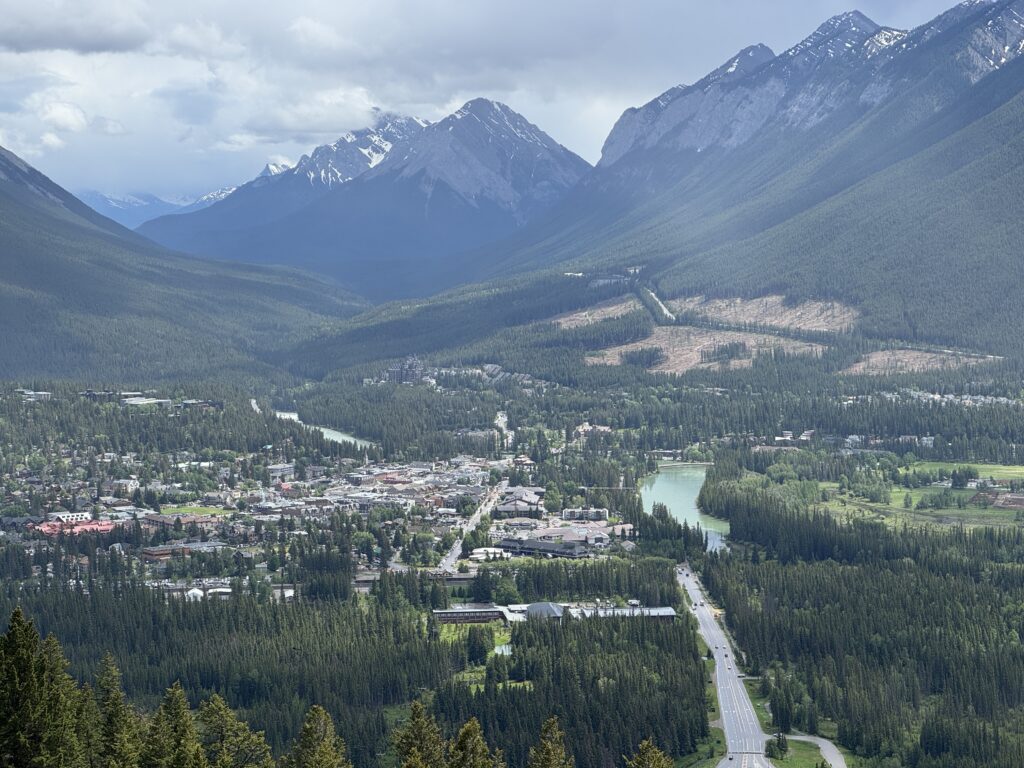
We skipped the Banff Gondola and Norquay ski lift in favor of the aFORDable drive to the Norquay overlook for the same view with $100+ still in our pockets. The Norquay Ski resort was running the chair lift to the top of the peak, but for us, the view at the scenic pull-off was good enough. Did we do Southern Banff the way it’s supposed to done? Who cares? We did it our way.