Vista del Bofecillos, deep in the interior of a remote and little known Texas outback, is not camping. The first night of the pilgrimage was definitely camping. With the T@G backed into a 60 feet concrete pad at Site 26 and tethered to a metal breaker box of 20, 30 and 50 amp varieties, human activity buzzed all around. Kids zoomed by on bicycles. A classic rock station drifted Bob Seger through the air. We occupied the second to last available spot at Sam Houston Jones Louisiana State Park and after 900 miles on the road we were happy to have it.

“Y’all have come a long way,” Paula said warmly, welcoming us home in a sweet southern drawl. She was precisely who we imagined her to be when she took our phone reservation as we sped across the 18 mile long Atchafalaya Basin Bridge 7 hours before. “Travel safe and see y’all soon.” she said, sounding like pure Lake Charles, LA. Arriving too late to cook, we snarfed on a mediocre 14” King Charles from Crust, the local bougie pizzeria 2 miles from the park, washing it down with a tall boy from the last stop Chevron.

No doubt about it, we were camping. The familiar Airsteams and Grand Design Solitudes used every inch of the enormous concrete pull throughs equipped with water, power, sewer and wi-fi. Smoke from campfires of wet wood gave a pungent odor to the air. Dogs barked at a brave fox that dared to appear from the brush surrounding the lake, probably hunting for leftovers. Everyone was clearly having a good time but it is not the pilgrimage to nature that we were looking for. It is more like a miniaturized version of suburban life with a different view and different neighbors – not that there is anything wrong with that. As our fellow campers disappeared into their rolling condos to catch the evenings’ game on the big screen TV before a morning of fishing on the lake, we collapsed into the T@G. Bradenton to west of New Orleans is a haul.

The second night we were most likely camping. 600 miles west of the Lake and into the Desert Vista. We arrived in time to heat up pre-made enchiladas from the fridge while the sun set over the Seminole Canyon a few hundred miles west of San Antonio. Perched on the edge of west Texas, Seminole Canyon Texas State Park is adjacent to the Amistad National Recreation Area near the border town of Del Rio where Border Patrol agents out number tourists. The Patrols’ brand new Chevy trucks stood out with their distinctive green on white lettering. We rolled through numerous check points and were waved on by the combat clad men of varying ages all wearing RayBan aviators and a bullet proof vest. The sites were gravel with water and power but no sewer or wi-fi. With less than half the sites occupied, a handful were smaller rigs, but bigger than us, and the rest were massive toy haulers with their ATVs and boats in tow. Most everyone kept to themselves although one old-timer paid a visit to congratulate us on joining the T@G team. “How ya like your T@G?” he beamed. “I used to have one and loved it. So easy to tow. Fit in the garage. But the wife wanted something bigger, with a kitchen. Now we have a T@B.” nuCamp has a bit of a cult following, we guessed. Curiously, when we took a walk by his site, he was alone. I guess the wife didn’t much care for the T@B either.

Still, the sparkling bath house and big rigs occasionally cycling through the dump station reminded us that we were definitely camping. On our way out, Eric and the park ranger exchanged pros and cons on various Teardrop brands at the Visitor Center. It was lovely camping, really. We could have stayed there for a few more nights had we not been on a pilgrimage shot clock.

Pressing along the Texas/Mexico border, the distance between gas stations approached 100 miles. State road 90 may only be two lanes, but the speed limit is a freeway like 75 mph. The T@G kept up admirably. We provisioned in the great metropolitan hub of Alpine, TX, county seat for the area. Student’s from Sul Ross State and ranch hands from the Permian Basin filled the stores. Continuing west and south, we rolled into the Big Bend notch of Texas. The temperature began to rise and the 7800 feet peaks of the Chisos Mountains rose up on the horizon. Road weary, we finally reached the old Spanish Fort in Presidio that served as the Ranger office for visitors to the interior of Big Bend Ranch State Park.

If half a million people visit Big Bend National Park each year less than a tenth of that make it to the similarly named state park. And, most of them do the Rio Grande drive, often called the most beautiful stretch of roadway in Texas. A popular rafting put-in spot or box canyon hike are the hot spots. 99% of the park area is termed the interior, and almost no one goes there. If only a few hundred people hike, mountain bike or off-road in each year we would not be surprised. As described by the National Park Ranger at Big Bend, “there is nothing to see.” In a way, that is a true sentiment. It is simply a vast expanse of wilderness with rough roads and primitive sites. There are no gas stations, camp store, hookups, or facilities. In the center of the interior is a ranger bunk house that sometimes has an actual ranger at the station and hopefully has potable water to refill the jugs.

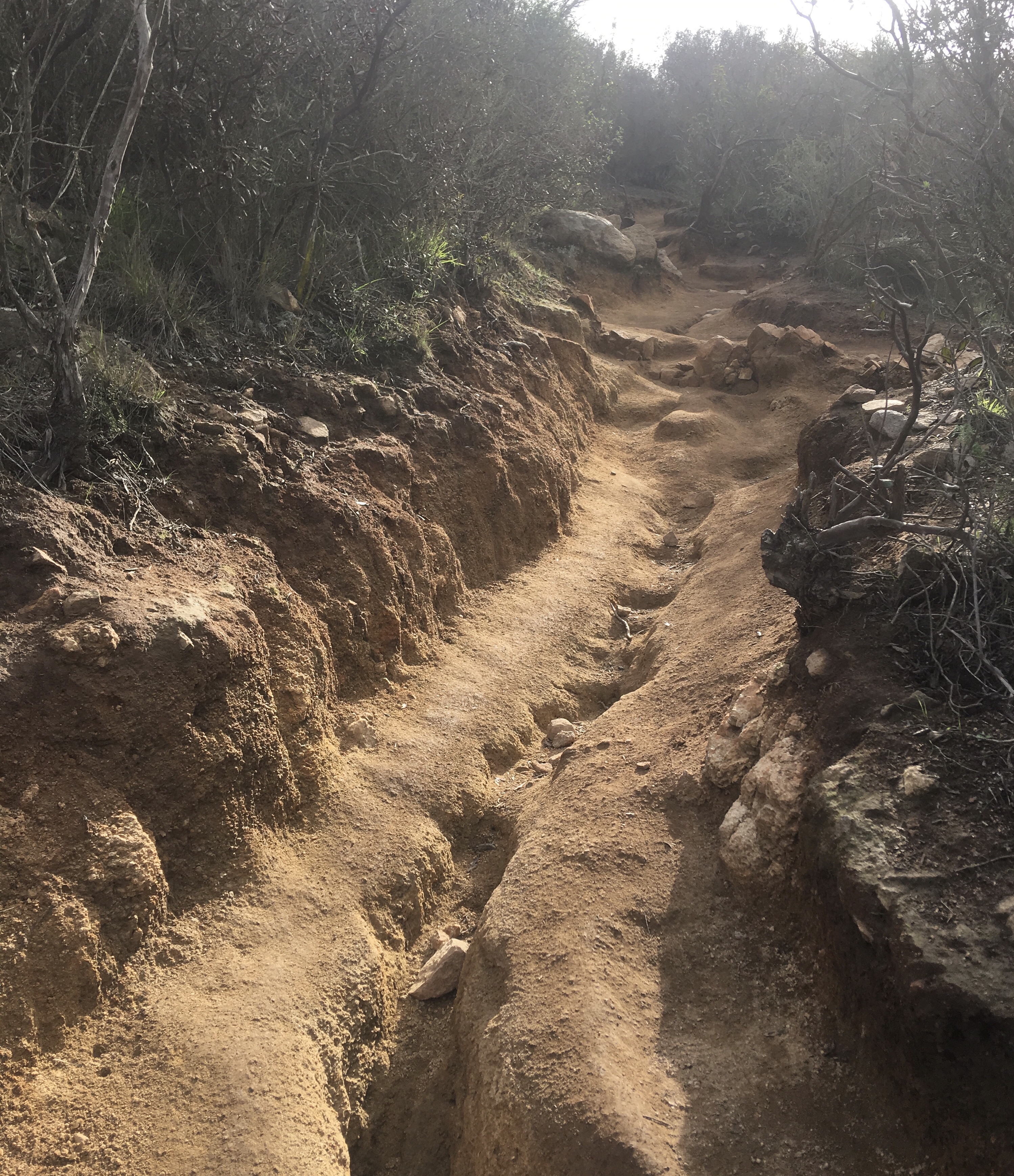
Ranger Sammy checked us in to the interior, anxious to show us a video of a recent bear sighting in the park. “Put your food in the bear box and make lots of noise if you see one,”he warned, adding, “And look for the last blooms of yellow on the Chollas.” Five miles outside of the Fort, pavement gave way to gravel, and then gravel to dirt, and finally a pair of rutted tracks out to an overlook of the Bofecillos Mountain range with views across the Rio deep into Mexico. It is a beautiful spot in a desert landscape of prickly pear, ocotillo, and bottle brush cacti with the Bofecillos range to the north and the Rio to the south. We had been here once before and honestly never thought we would be back again. Never say never.

The T@G rolled 1800 miles with the last 30 being an actual shakedown into the interior. Covered in a thick layer of volcanic dust, the T@G was almost certainly the biggest rig in the park. We were no longer camping. There was not another sole around for at least 20 miles. Our ears were ringing, unaccustomed to the lack of background noise. No highways, no radios, no human chatter, no engine sounds, nothing but the subtle sounds of nature. It was really un-nerving. For the next few days, power will come from the sun; water from a half a dozen jugs; and food from the small fridge hooked to the solar panels. We arrived at our pilgrimage to nature’s desert shrine. In a bizarre juxtaposition of environment and technology, we fired up the Starlink to post this blog. As the high speed connection to the internet bounced off of unseen satellites racing across the sky, it hurt our heads to contemplate. Call it boondocking, call it living off grid, call it whatever you like, just don’t call it camping.