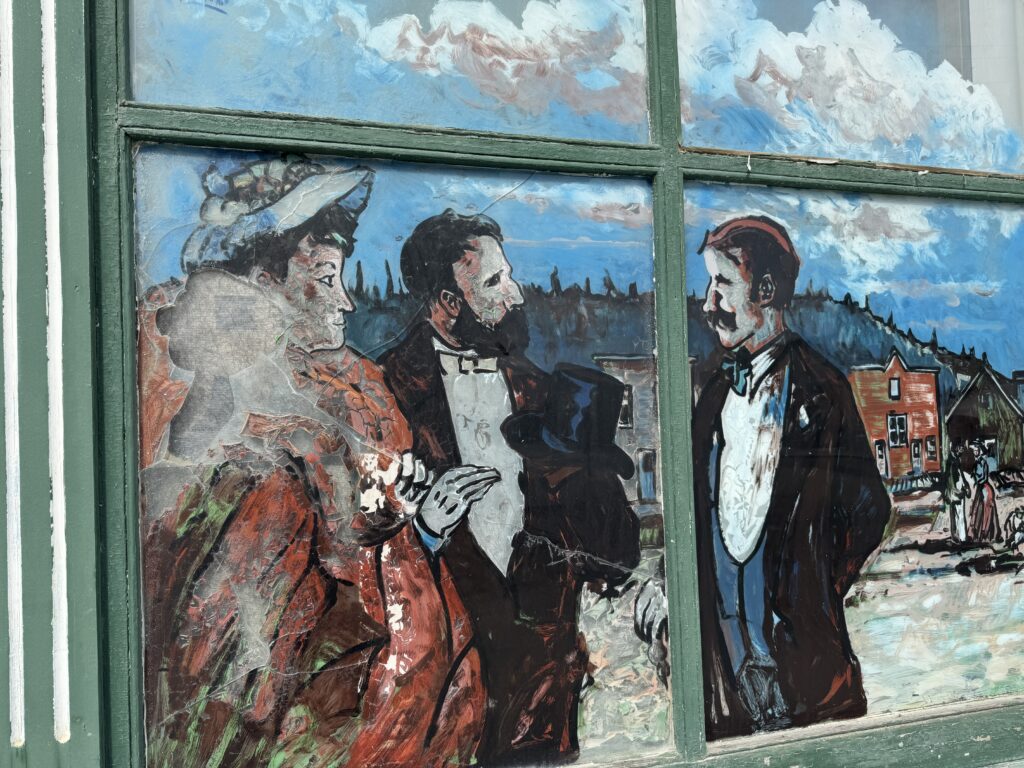
If there is one timeless characteristic of human psychology it has to be the fear of missing out. Today it has its own acronym, FOMO. When Skookum Jim found marble sized nuggets of gold in Bonanza Creek, ten miles outside of Dawson City in the Yukon Territory in 1896, the rest of the world caught FOMO fever and the Klondike Gold Rush was launched.
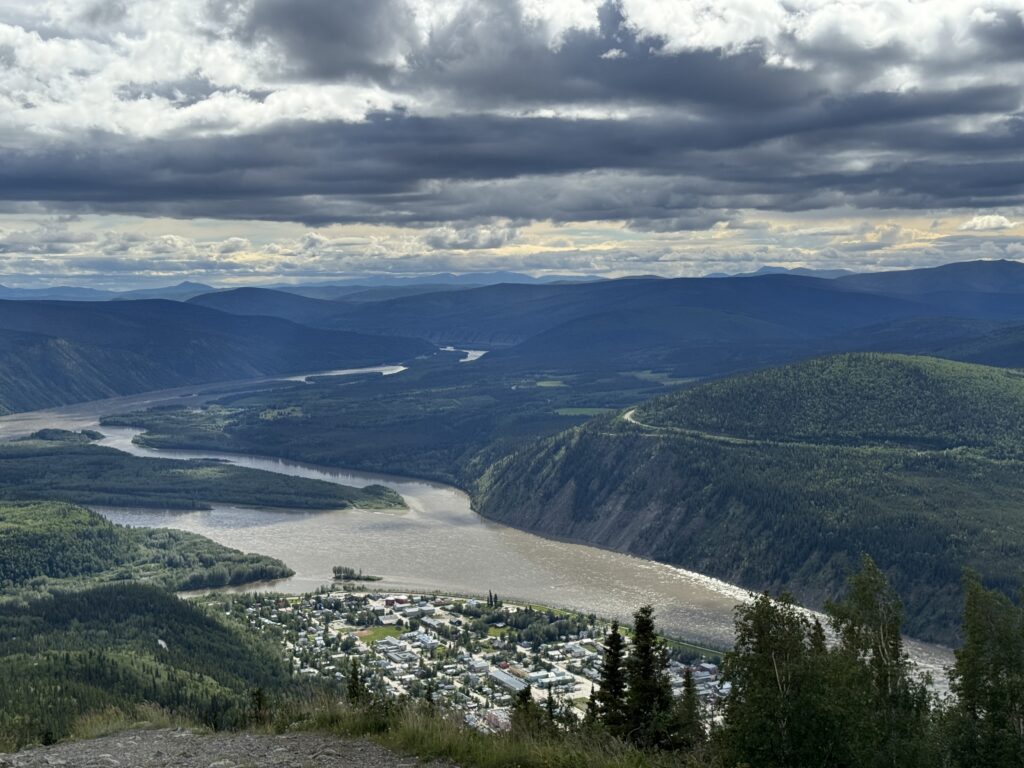
The sleepy town of Dawson ballooned from a few hundred inhabitants to more than 30,000+ stampeders in just two years. Even Jack London heard the Call of the Wild FOMO and journeyed north to report on Dawson, and while he was there, penned a famous novel or two. Today, FOMO could be stock in a space company IPO or a new crypto meme coin. We want in because everyone wants it. FOMO rules behavior.
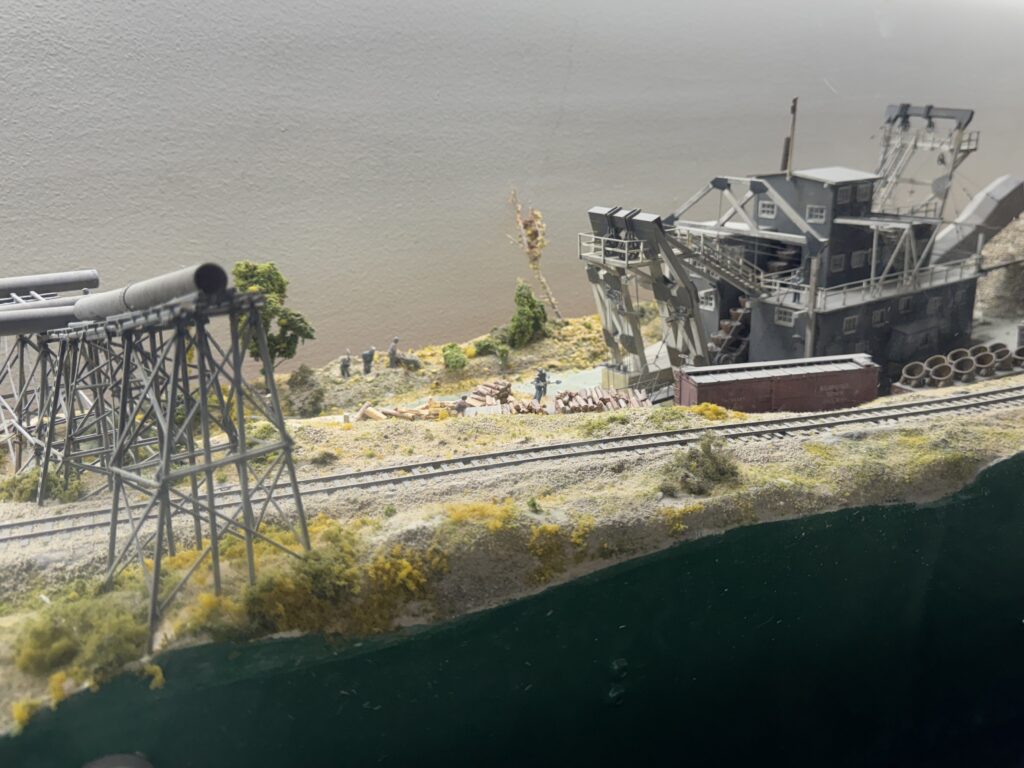
By 1899, all of the nuggets in the river beds around Dawson City had been picked up. But, folks kept piling into Dawson for a couple of more years because that’s how the herd mentality works. For the most part, by the time you have heard about the “rare opportunity”, you are the liquidity pool for the insiders who have been positioned for a while. By 1903, Dawson had transitioned to industrial mining which required big equipment and few people, The population went back to a thousand or less but its image and reputation as the quintessential gold rush town had been fixed in time.
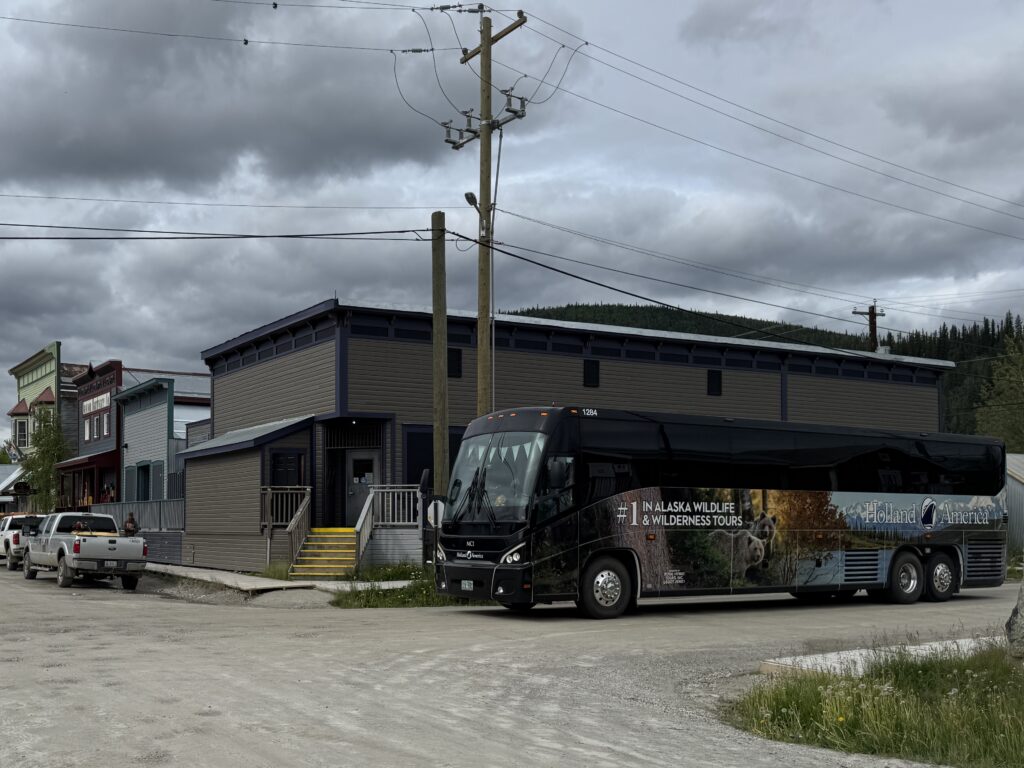
Through two world wars and longer, Dawson limped along, not thriving, but not quite dying. When the Al-can Highway decided to bypass Dawson and go no further north than Whitehorse in the Yukon Territory, smart money thought Dawson was toast. But, Dawson had a trick up its sleeve; nostalgia and cruise ships full of folks with a bucket list. It may be 500 miles from the Alaskan cruise ship ports to Dawson, but that’s what they call a “multi-day land package” in Holland America speak. Tourism is the new gold rush destined to save, and probably transform, Dawson City.
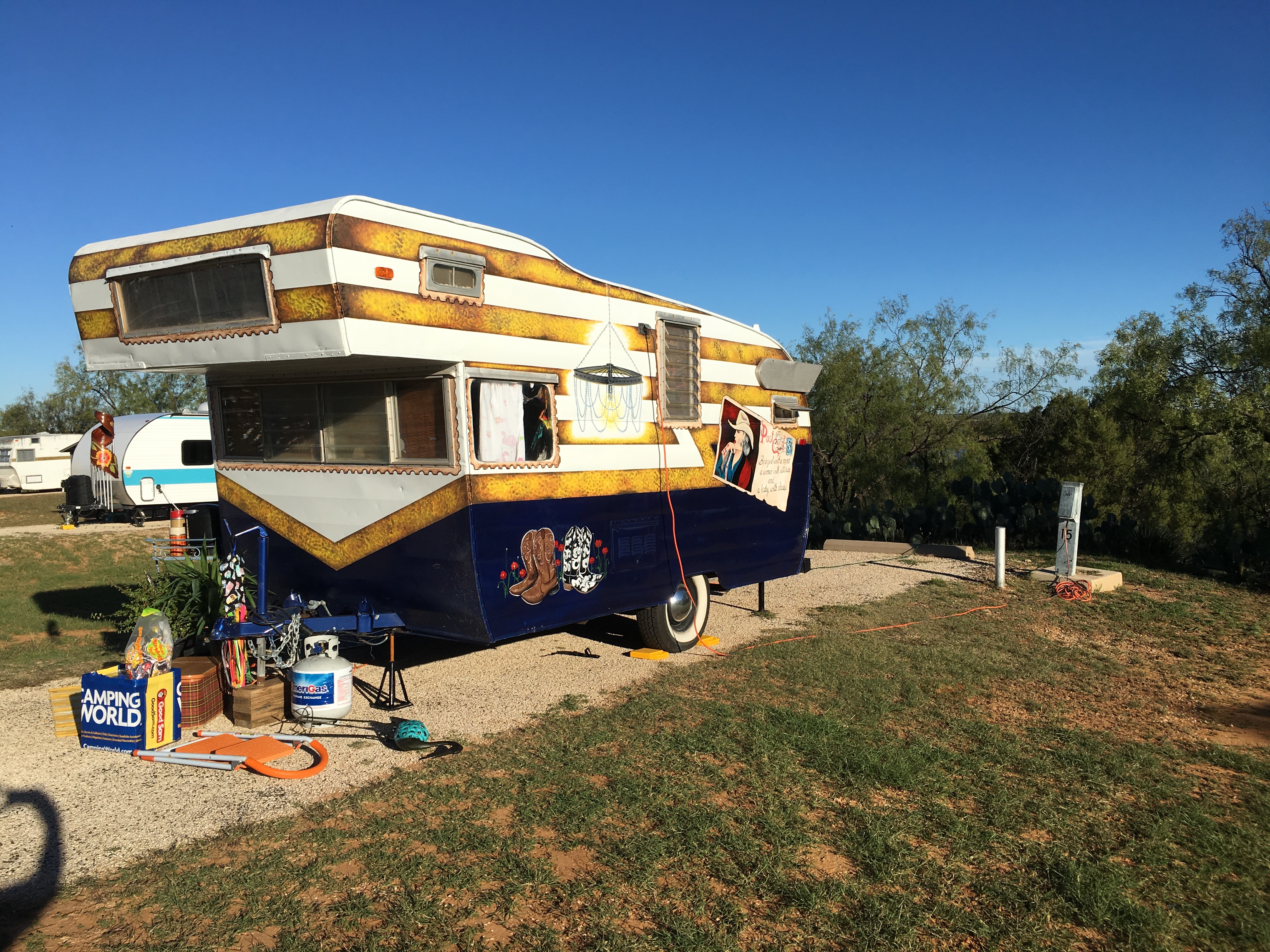
We joined the small group of RV’ers passing through Dawson, congregating at the Klondike RV Park where eight coin washers and dryers work non-stop and showers accept a Toonie ($2) for five minutes of hot water. Canada Parks has done its part in elevating Dawson history to UNESCO World something or other and designating 17 buildings as historically significant in telling the story of the Klondike Gold Rush.
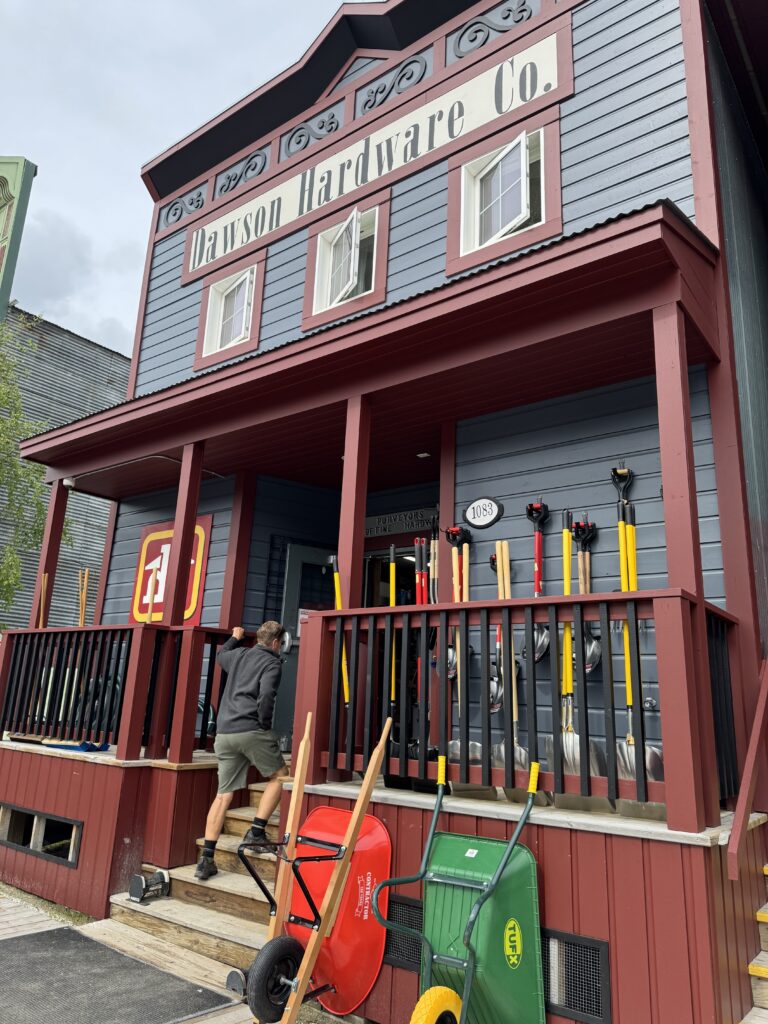
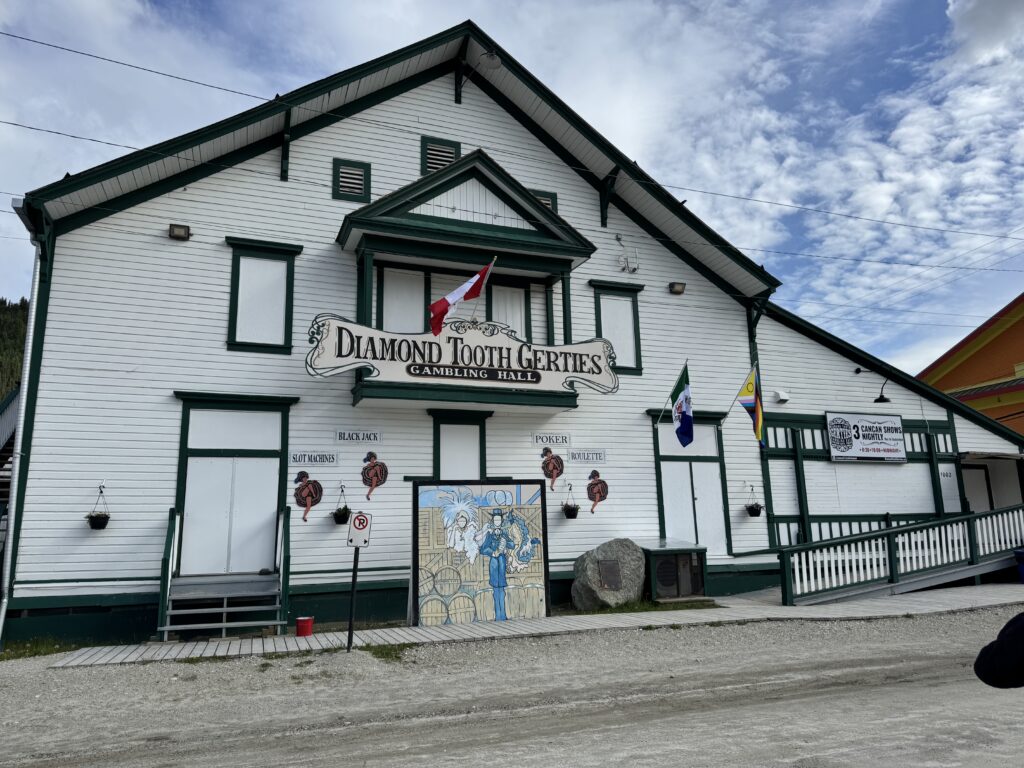
Between wash cycles, we rambled over the “intentionally” unpaved muddy Dawson streets bordered by wooden sidewalks. Many of the original 1900 buildings still stand as a grocery store, souvenir shop, or outdoor outfitters. Other Gold Rush era buildings are being brought back to life as eateries and candy shops. New buildings, notably Holland America hotels buildings built in the style of the 1890’s, are styled to blend in.
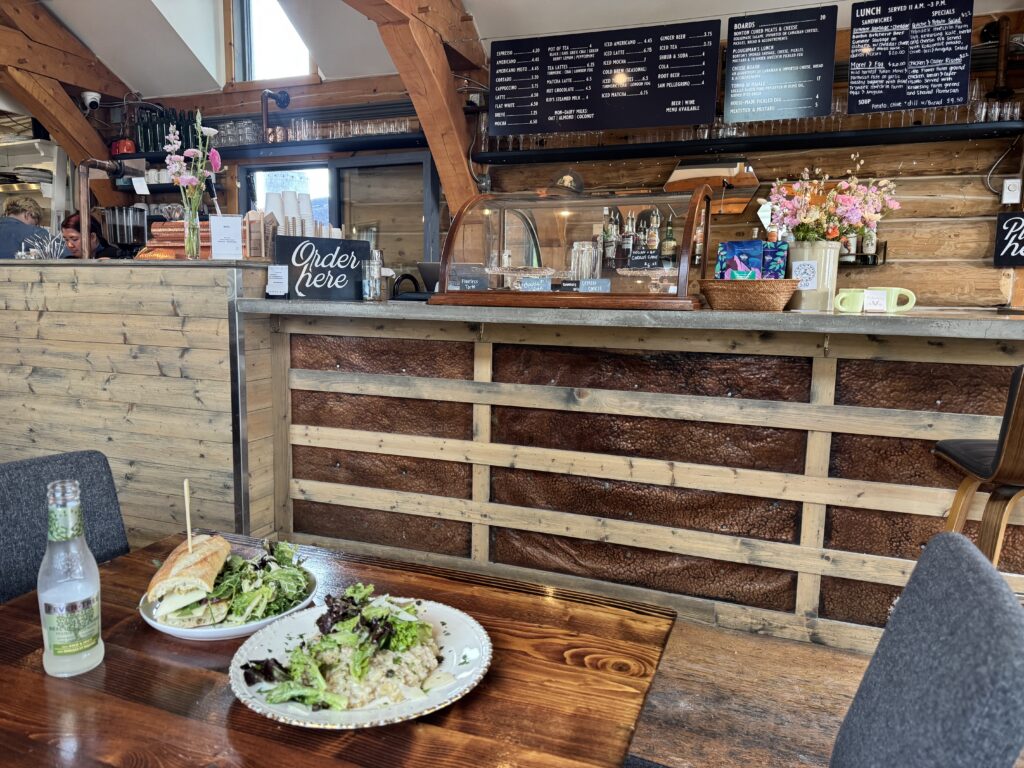
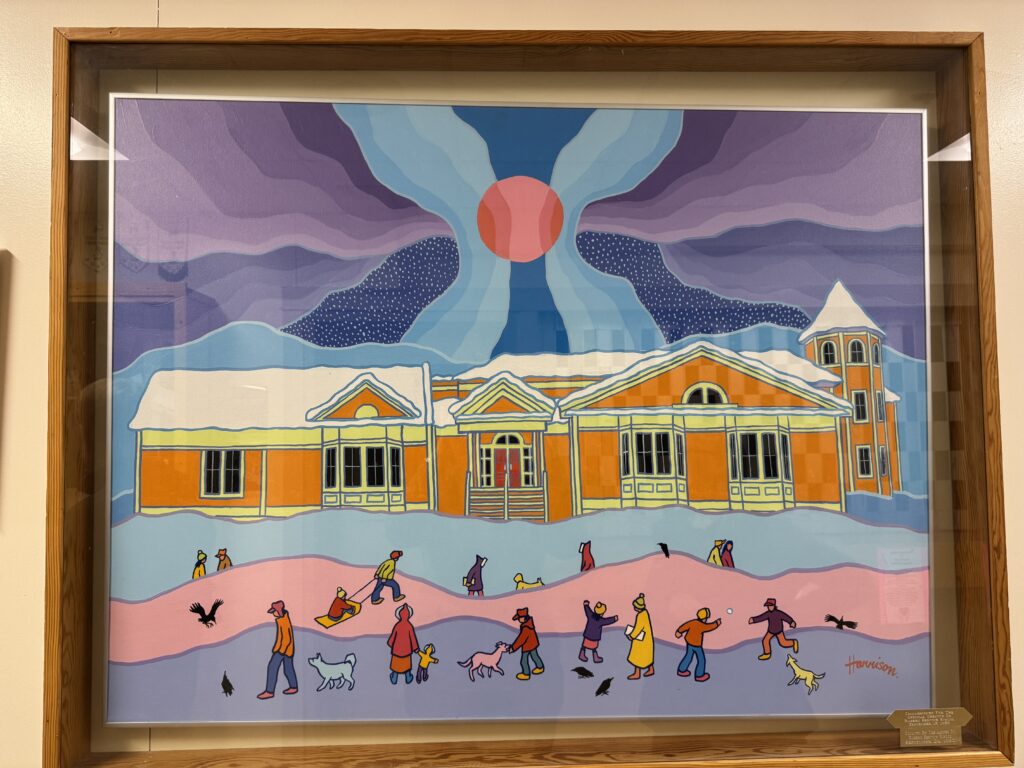
We lingered in the first-rate visitors center, watching all five films on the history of Dawson. After the dryer cycle ended, we lunched at BonTon & Co.(named best new restaurant in Canada), a laid back eatery featuring seasonal Yukon produce and meats. It was cool, eclectic, and delicious and we sure were glad that Holland America was bringing 100 people a day up from the Alaskan coast to keep it in business. The librarian sat patiently in the stunning Robert Service Library & School for someone, anyone, to wander in, giving us free books and an insiders tour of the facility.
A couple of buses a week from one cruise line isn’t enough to turn Dawson into a Banff, but it is enough to let Dawson survive. That plus the strange RV’ers passing through, like ourselves, gives Dawson a chance to showcase a truly strange time in human history when men left their families on the east coast of America, Europe, and Asia, to strike it rich north of nowhere. That brief period of time when anyone could become fabulously wealthy by staking a lucky claim is immortalized in Dawson. The mighty Yukon River still flows alongside the town, but the paddle wheels are static displays and no longer haul precious cargo south. That job is left to the Prevost Tour buses.
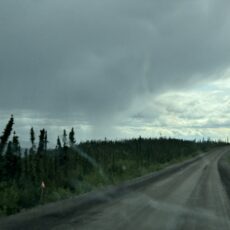
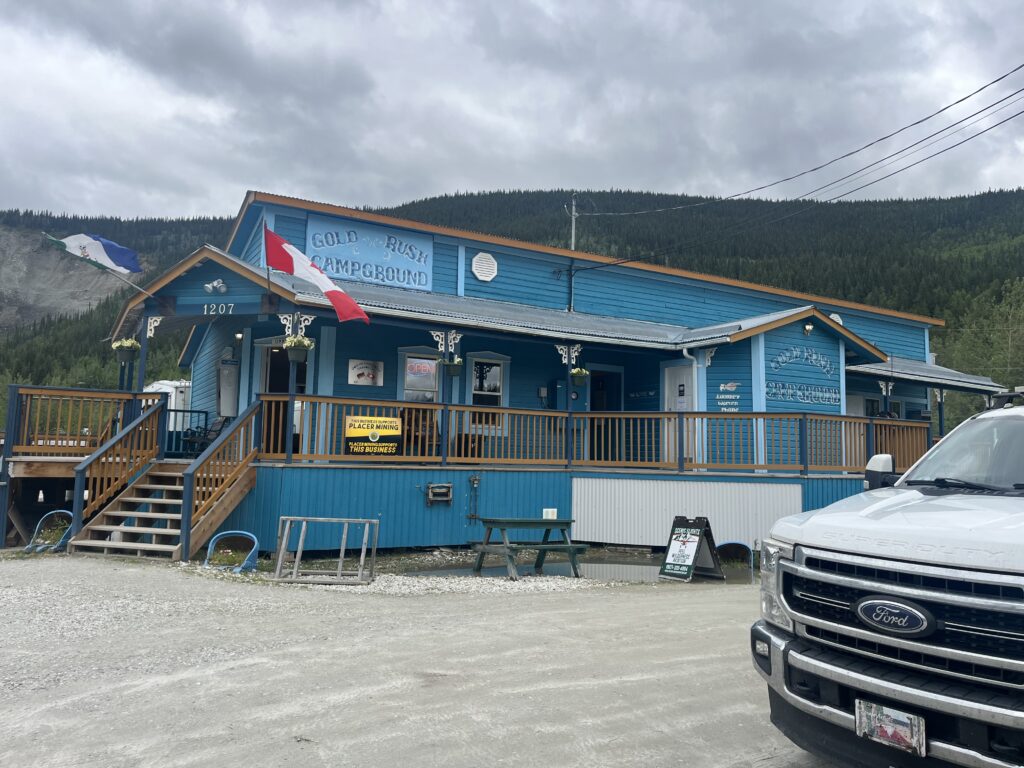
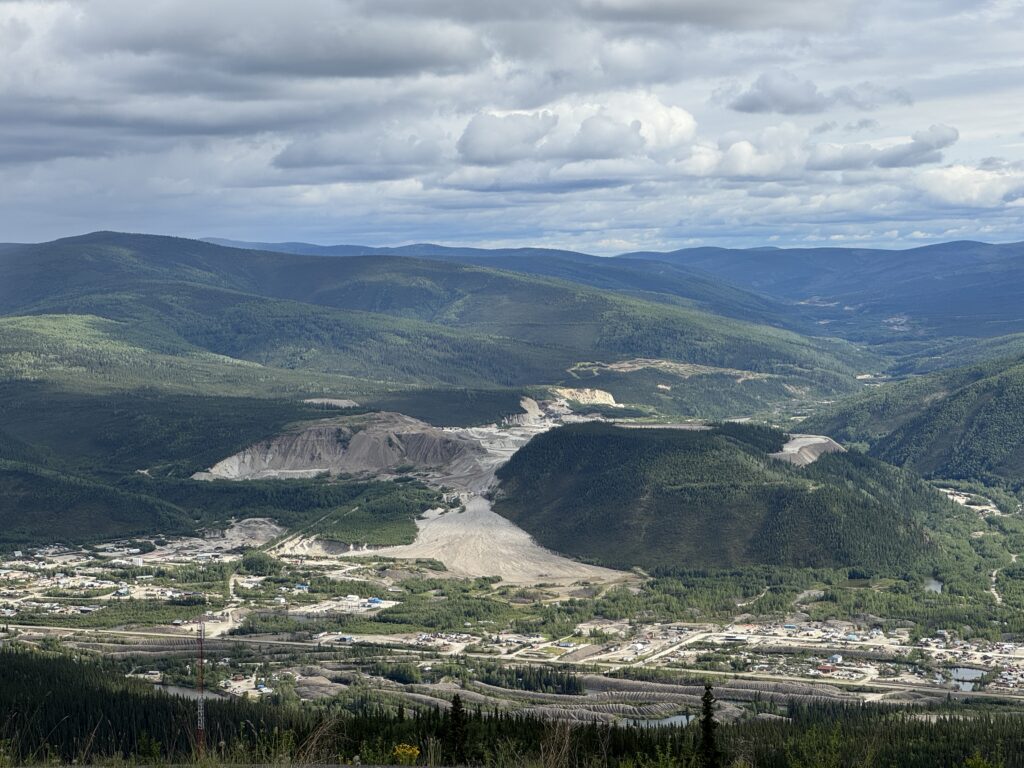
Ten miles outside of Dawson, along the banks of the Klondike Creek, we have staked our claim in a rustic territorial campground where whatever ore might be in the river bed is being violently protected by the local mosquitos. Like the Stampeders of 1897, we head into town to provision, loading up on potable water, clean laundry and a store made Shepards Pie for an easy dinner from the Bonanza Market. Bands of rain pass through in the evenings – a two edged sword since the rain hold the mosquitos at bay but the CLAM and T@G leak a bit. Holland America may have made Dawson accessible, but one mile out of town it is still a harsh wilderness.
Before leaving Dawson at the end of our tour/laundry/dining day, we ducked into the Holland America Suites lobby in the center of town. Looking like we could have stepped off a tour bus, the receptionist filled our Yeti thermos with ice from the hotel ice machine. It’s hard to have a proper Happy Hour back at camp mosquito without a little ice. Compared to the town of Deadwood in the Dakotas, Dawson City has not become all tour bus and no stampeder. Dawson still feels authentically gritty, but with ice machines for the tourists.